Daily Current Affairs: The Key to Success in Competitive Exams Now create for this for prabh kirpa classes
In today’s highly competitive environment, success in government and competitive examinations is not determined only by hard work. Smart preparation, consistent practice, and staying updated with current events play an equally important role. Whether you are preparing for SSC, Banking, UPSC, Railways, State PCS, Defence, Teaching, or any other competitive examination, one section that cannot be ignored is Current Affairs.
Many aspirants spend months mastering Mathematics, Reasoning, English, and General Science but often underestimate the importance of daily current affairs. As a result, they lose valuable marks in the General Awareness section. The truth is that current affairs can become one of the highest-scoring sections if prepared consistently.
This is why successful candidates make reading and revising current affairs a daily habit. At Prabh Kirpa Classes, students are encouraged to stay informed about national and international events, government schemes, economic developments, sports updates, science and technology breakthroughs, and important appointments.
This blog explains why daily current affairs are the key to success in competitive exams and how students can effectively prepare this important subject.
Why Current Affairs Matter in Competitive Exams
Almost every competitive examination includes questions related to current events. Exam authorities want to assess not only a candidate’s academic knowledge but also their awareness of the world around them.
Current affairs questions are commonly asked in:
- SSC CGL
- SSC CHSL
- SSC MTS
- Banking Exams
- IBPS PO
- SBI PO
- RBI Assistant
- UPSC Civil Services
- Railway Recruitment Exams
- Defence Exams
- State Government Exams
- Teaching Eligibility Tests
- Police Recruitment Exams
Aspirants who regularly follow current affairs gain a significant advantage over those who rely only on static subjects.
The Weightage of Current Affairs in Exams
Many candidates are surprised to learn that current affairs often contribute a substantial portion of the General Awareness section.
For example:
SSC Exams
Questions may cover:
- Awards and Honors
- Government Schemes
- Sports Events
- Important Days
- International Organizations
- Science and Technology
Banking Exams
Current affairs form a major part of:
- General Awareness
- Banking Awareness
- Financial Awareness
UPSC Civil Services
Current events influence:
- Prelims
- Mains
- Essay Writing
- Interview
This demonstrates why staying updated daily is not optional—it is essential.
Benefits of Reading Daily Current Affairs
1. Improves General Awareness
Current affairs help candidates understand what is happening in India and around the world.
Students become aware of:
- Political developments
- Economic policies
- International relations
- Environmental issues
- Scientific discoveries
This knowledge is useful not only for examinations but also for personal growth.
2. Increases Exam Scores
Current affairs questions are usually direct and factual.
For example:
- Who won a particular award?
- Which country hosted an event?
- Who was appointed to a specific position?
- Which government scheme was launched recently?
With proper preparation, candidates can answer these questions quickly and accurately.
This improves overall scores significantly.
3. Enhances Interview Performance
Many competitive examinations include interviews or personality tests.
Interview panels often ask questions related to:
- Recent national events
- International developments
- Government policies
- Economic issues
Candidates who regularly read current affairs appear more confident and informed.
4. Strengthens Decision-Making Skills
Following current events helps students analyze situations from different perspectives.
This improves:
- Critical thinking
- Problem-solving ability
- Analytical reasoning
These skills are valuable for both examinations and professional careers.
5. Supports Multiple Subjects
Current affairs often overlap with:
- History
- Geography
- Economics
- Political Science
- Science
For example, reading about a new government scheme may also improve understanding of Indian polity and economics.
Thus, one topic can help in multiple areas of preparation.
Important Areas of Current Affairs
Students should focus on the following categories:
National News
Includes:
- Government policies
- Parliament sessions
- Important judgments
- Infrastructure projects
- Social welfare schemes
National events are frequently asked in examinations.
International Affairs
Topics include:
- Global summits
- International organizations
- Diplomatic relations
- Global conflicts
- Climate agreements
Questions related to international developments are common in UPSC and Banking examinations.
Economy and Banking
Candidates should follow:
- RBI policies
- Inflation reports
- Budget announcements
- Banking reforms
- Economic surveys
This area is especially important for Banking and SSC examinations.
Science and Technology
Students should stay updated about:
- Space missions
- Artificial Intelligence
- Medical advancements
- Research achievements
- Technological innovations
Science-based current affairs are becoming increasingly important in modern examinations.
Sports
Sports questions often include:
- Tournament winners
- Host countries
- Player achievements
- Rankings
- Records
Regular sports updates can help secure easy marks.
Awards and Honors
Students should know:
- National awards
- International awards
- Literary prizes
- Sports awards
- Scientific recognitions
Award-related questions appear frequently in competitive examinations.
Important Days and Themes
Examples include:
- World Environment Day
- International Yoga Day
- World Health Day
- National Science Day
Exams often ask about dates and themes associated with important observances.
Books and Authors
Candidates should maintain notes on:
- Newly released books
- Famous authors
- Award-winning publications
This topic regularly appears in General Awareness sections.
Common Mistakes Students Make
1. Studying Current Affairs Only Before the Exam
Many students begin reading current affairs just a few weeks before the examination.
This creates information overload and leads to poor retention.
Current affairs should be studied daily.
2. Depending on Multiple Sources
Using too many sources can create confusion.
Students should choose reliable and consistent sources for preparation.
3. Ignoring Revision
Reading alone is not enough.
Without revision, important facts are easily forgotten.
Weekly and monthly revisions are essential.
4. Memorizing Without Understanding
Current affairs should not be learned mechanically.
Understanding the background of events improves retention and helps in descriptive examinations.
Effective Strategy for Current Affairs Preparation
Step 1: Read Daily
Spend at least 20–30 minutes every day reading important updates.
Consistency matters more than duration.
Step 2: Make Notes
Prepare short notes covering:
- Dates
- Events
- Important personalities
- Key facts
These notes become valuable during revision.
Step 3: Use Monthly Compilations
Monthly current affairs magazines and PDFs help consolidate information.
They are useful for quick revision before examinations.
Step 4: Attempt Quizzes
Daily quizzes improve:
- Accuracy
- Speed
- Retention
They also help identify weak areas.
Step 5: Revise Regularly
A simple revision cycle can be:
- Daily Revision
- Weekly Revision
- Monthly Revision
This ensures long-term retention.
Role of Current Affairs in UPSC Preparation
For UPSC aspirants, current affairs form the backbone of preparation.
They influence:
Prelims
Objective questions are often based on current developments.
Mains
Candidates must connect current events with static subjects.
Essay Writing
Current examples strengthen arguments.
Interview
Awareness of contemporary issues reflects personality and maturity.
Thus, daily current affairs preparation is indispensable for UPSC success.
Role of Current Affairs in SSC and Banking Exams
SSC and Banking examinations often include straightforward current affairs questions.
Examples include:
- Recent appointments
- Government schemes
- Sports achievements
- Economic updates
- Awards and honors
Candidates who revise current affairs regularly can score exceptionally well in these sections.
How Prabh Kirpa Classes Helps Students
At Prabh Kirpa Classes, students receive structured guidance for current affairs preparation.
Daily Updates
Important news and exam-relevant topics are shared regularly.
Current Affairs Discussions
Key events are explained in a simple and understandable manner.
Practice Questions
Students solve exam-oriented MCQs based on recent developments.
Revision Sessions
Regular revision ensures better retention.
Competitive Exam Focus
Content is selected specifically for SSC, Banking, UPSC, Railways, Defence, and other government examinations.
This systematic approach helps students stay ahead in their preparation.
Building a Habit of Staying Updated
Success in competitive examinations is not achieved overnight. It is the result of small daily efforts repeated consistently.
Reading current affairs every day develops:
- Knowledge
- Awareness
- Confidence
- Analytical thinking
Over time, students become more informed and better prepared for both examinations and interviews.
A daily commitment of just a few minutes can create a huge difference in exam performance.
Conclusion
Current affairs are no longer just an additional topic in competitive examinations—they have become one of the most important components of success. Whether you are preparing for SSC, Banking, UPSC, Railways, Defence, or State Government exams, daily current affairs can significantly improve your score and overall performance.
The key lies in consistency. Reading current affairs daily, making notes, revising regularly, and practicing questions can transform this section into a major strength.
Remember, every successful candidate shares one common habit: they stay informed about the world around them.
Start today, stay consistent, and make daily current affairs an essential part of your preparation journey.
Prabh Kirpa Classes is committed to helping aspirants stay updated, informed, and exam-ready through regular current affairs guidance and quality educational support.
Stay Updated. Stay Prepared. Stay Ahead. 🚀
Newsletter
Recent Posts

New Exoplanet Reveals Giant Planet Formation Secrets | Space Discovery | Current Affairs 2026
How does the newly discovered exoplanet help scientists understand giant

Google Launches AI Courses in 220+ Engineering Colleges | AI Education India | Current Affairs 2026
What is Google’s new AI education initiative in India?
In
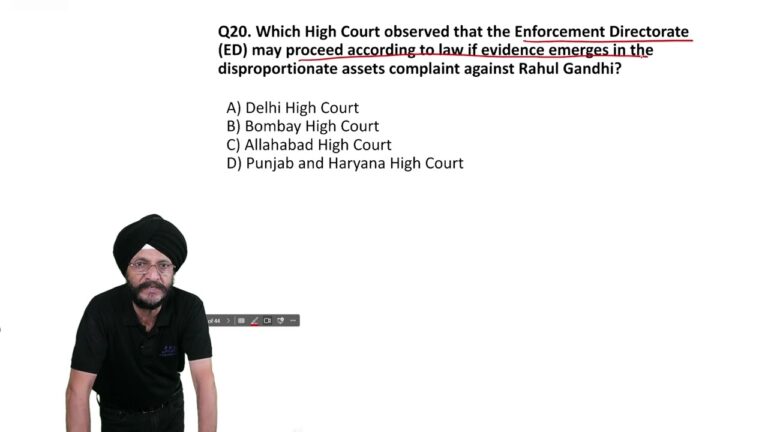
High Court Gives ED Green Signal in Rahul Gandhi Case | Current Affairs 2026 | Important MCQ
High Court Gives ED Green Signal in Rahul Gandhi Case

Which Industrial Unit Did KTR Urge Telangana to Restart? | Current Affairs 2026 | MCQ
In July 2026, K.T. Rama Rao (KTR) urged the Telangana