
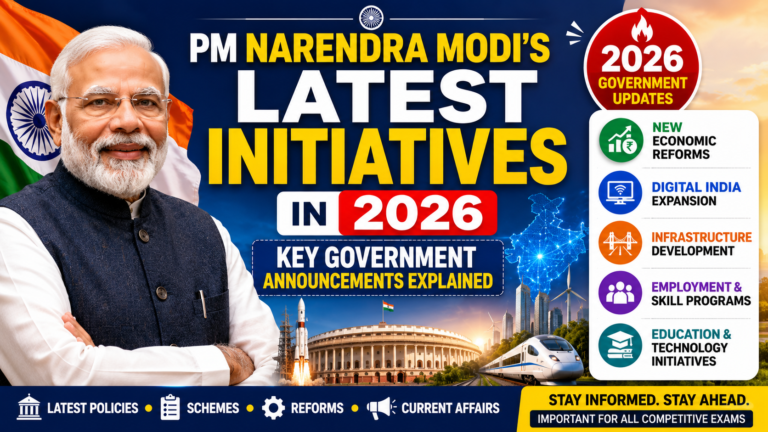
PM Narendra Modi’s Latest Initiatives in 2026: Key Government Announcements Explained
Introduction
Prime Minister Narendra Modi continues to play a significant role in shaping India’s economic, social, technological, and global development agenda in 2026. Under his leadership, the Government of India has introduced several initiatives aimed at strengthening infrastructure, promoting digital transformation, creating employment opportunities, supporting startups, improving education, enhancing healthcare, and accelerating India’s journey toward becoming a developed nation.
As India moves closer to achieving the vision of “Viksit Bharat 2047,” various government programs and policy announcements have gained attention among citizens, businesses, investors, and students preparing for competitive examinations. Understanding these initiatives is important not only for staying informed but also for SSC, UPSC, Banking, Railway, Defence, CUET, and other government exam aspirants.
This article provides a detailed overview of Prime Minister Narendra Modi’s latest initiatives in 2026 and explains their objectives, benefits, and impact on India’s future.
Vision of Viksit Bharat 2047
One of the central themes of the Modi government’s governance strategy is the vision of “Viksit Bharat 2047.” This long-term roadmap aims to transform India into a developed nation by the year 2047, marking 100 years of independence.
The vision focuses on:
- Economic growth
- Technological innovation
- Infrastructure development
- Education reform
- Healthcare accessibility
- Employment generation
- Sustainable development
- Digital transformation
Various schemes launched in 2026 align with this broader national objective.
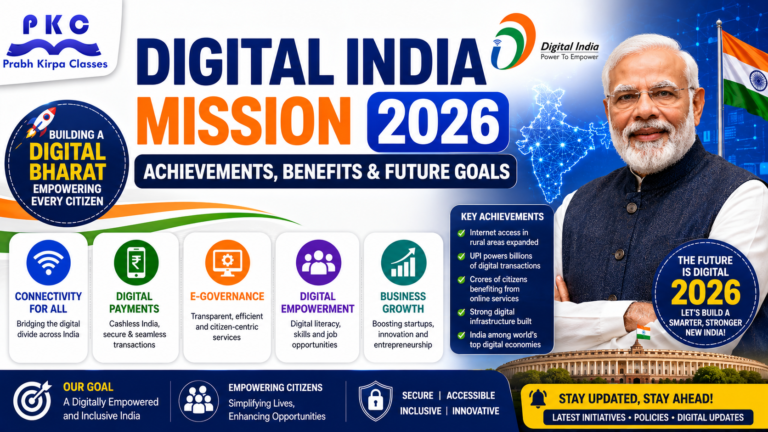
Digital India Expansion Program
The Digital India initiative remains one of the government’s flagship programs.
In 2026, additional efforts have been made to strengthen digital infrastructure across rural and urban India.
Key Objectives
- Improve internet connectivity
- Promote digital literacy
- Expand digital services
- Strengthen cybersecurity
- Support digital governance
Benefits
- Faster access to government services
- Increased digital transactions
- Enhanced transparency
- Reduced paperwork
- Better rural connectivity
The expansion of digital infrastructure has helped bridge the gap between urban and rural populations.
Artificial Intelligence and Technology Development
India is increasingly focusing on Artificial Intelligence (AI), machine learning, and emerging technologies.
The government has announced initiatives to encourage:
- AI research
- Innovation centers
- Startup incubation
- Skill development
- Industry-academia collaboration
Impact
These initiatives aim to position India as a global technology hub while creating high-paying employment opportunities for youth.
Educational institutions and technology companies are being encouraged to develop AI-driven solutions for healthcare, agriculture, education, and governance.
Startup India 2.0
The Startup India mission has been expanded to support entrepreneurs and innovation.
Major Focus Areas
- Simplified regulations
- Funding support
- Incubation centers
- Women entrepreneurship
- Rural innovation
Benefits for Entrepreneurs
- Easier business registration
- Access to funding
- Tax incentives
- Mentorship opportunities
- Market access support
India continues to be one of the world’s fastest-growing startup ecosystems.
Infrastructure Development Projects
Infrastructure development remains a top priority for the Modi government.
Several major projects announced in 2026 focus on:
Transportation
- National highways
- Expressways
- Railway modernization
- Metro rail expansion
Logistics
- Freight corridors
- Smart logistics hubs
- Industrial corridors
Urban Development
- Smart cities
- Housing projects
- Public transport systems
These investments are expected to boost economic growth and improve connectivity.
PM Gati Shakti Mission Expansion
The PM Gati Shakti National Master Plan continues to receive strong government support.
Objectives
- Integrated infrastructure planning
- Faster project execution
- Improved logistics efficiency
- Reduced transportation costs
Expected Outcomes
- Better coordination among ministries
- Increased investment opportunities
- Enhanced supply chain efficiency
- Job creation
The initiative aims to make India more competitive globally.
Make in India Manufacturing Push
The government continues to promote domestic manufacturing through the Make in India campaign.
Focus Sectors
- Electronics
- Semiconductors
- Defence manufacturing
- Renewable energy equipment
- Automotive industry
Benefits
- Employment generation
- Increased exports
- Reduced imports
- Economic self-reliance
The initiative supports India’s goal of becoming a global manufacturing hub.
Semiconductor Development Mission
Semiconductor production is a strategic priority for India.
The government has announced measures to encourage:
- Semiconductor manufacturing units
- Research and development
- Technology partnerships
- Skilled workforce development
Importance
Semiconductors are critical for:
- Mobile phones
- Computers
- Automobiles
- Artificial intelligence systems
- Defence technologies
Strengthening domestic semiconductor production reduces dependency on imports.
Green Energy and Sustainability Programs
The Modi government has continued to prioritize environmental sustainability.
Renewable Energy Goals
India is expanding investments in:
- Solar energy
- Wind energy
- Green hydrogen
- Battery storage technology
Benefits
- Reduced carbon emissions
- Energy security
- Employment opportunities
- Sustainable economic growth
The government aims to establish India as a global leader in renewable energy.
National Green Hydrogen Mission
Green Hydrogen has emerged as a major focus area.
Objectives
- Promote clean energy
- Reduce fossil fuel dependency
- Support industrial decarbonization
- Enhance energy exports
Expected Impact
The mission is expected to create thousands of jobs while supporting environmental goals.
Education Reforms and Skill Development
The government continues implementing reforms aligned with the National Education Policy (NEP).
Key Areas
- Digital learning
- Vocational training
- Industry-oriented curriculum
- Skill development programs
Benefits
- Improved employability
- Better learning outcomes
- Enhanced technical skills
- Increased access to education
Skill development remains crucial for preparing India’s workforce for future industries.
Employment Generation Initiatives
Creating employment opportunities remains a key government objective.
Focus Areas
- Manufacturing
- Technology
- Infrastructure
- Services sector
- Entrepreneurship
Government Support
Programs provide:
- Skill training
- Apprenticeships
- Startup assistance
- Employment-linked incentives
These initiatives aim to improve youth employment and economic participation.
Healthcare Infrastructure Strengthening
The healthcare sector continues to receive significant investment.
Key Objectives
- Improve healthcare accessibility
- Upgrade hospitals
- Strengthen digital health services
- Expand medical education
Benefits
- Better healthcare delivery
- Increased rural healthcare access
- Improved patient outcomes
- Enhanced public health systems
The government’s healthcare initiatives focus on both preventive and curative care.
Ayushman Bharat Expansion
Ayushman Bharat remains one of India’s largest healthcare programs.
Features
- Health insurance coverage
- Cashless treatment
- Support for vulnerable families
Impact
Millions of citizens continue to benefit from affordable healthcare services through the scheme.
Agriculture and Farmer Welfare Programs
Agriculture remains the backbone of India’s economy.
Government Priorities
- Modern farming techniques
- Digital agriculture
- Irrigation development
- Farmer support schemes
Benefits
- Improved productivity
- Increased farmer income
- Better market access
- Sustainable farming practices
Technology is playing a growing role in agricultural development.
Rural Development and Connectivity
The government continues investing in rural development.
Key Areas
- Rural roads
- Internet connectivity
- Housing
- Drinking water
- Sanitation
Expected Outcomes
- Improved quality of life
- Economic opportunities
- Better access to services
- Reduced rural-urban disparities
These efforts support inclusive growth across the country.
Women’s Empowerment Initiatives
Women-led development remains an important focus area.
Government Support Includes
- Entrepreneurship programs
- Financial inclusion
- Skill development
- Education opportunities
Benefits
- Increased workforce participation
- Economic independence
- Leadership opportunities
- Social empowerment
Several schemes specifically target women entrepreneurs and self-help groups.
Financial Inclusion Programs
The government continues strengthening financial inclusion.
Focus Areas
- Digital banking
- Direct benefit transfers
- Banking access
- Financial literacy
Benefits
- Greater transparency
- Reduced leakages
- Improved financial access
- Economic empowerment
Digital payment systems continue to expand rapidly across India.
Foreign Policy and Global Leadership
India’s global influence continues to grow under Prime Minister Modi’s leadership.
Key Priorities
- Strategic partnerships
- Trade agreements
- Regional cooperation
- Global economic engagement
Benefits
- Increased foreign investment
- Enhanced trade opportunities
- Stronger diplomatic relations
- Global recognition
India is increasingly playing a leadership role in international forums.
Defence and National Security Modernization
The government continues investing in national security.
Major Areas
- Defence technology
- Indigenous manufacturing
- Border infrastructure
- Cybersecurity
Objectives
- Strengthen national security
- Reduce import dependency
- Promote domestic defence production
Defence modernization supports both security and economic growth.
Smart Cities and Urban Development
Urban transformation remains a major priority.
Focus Areas
- Sustainable infrastructure
- Public transportation
- Digital governance
- Environmental management
Benefits
- Improved quality of life
- Better urban services
- Reduced congestion
- Enhanced sustainability
Smart city initiatives continue to expand across multiple states.
India’s Economic Growth Outlook
Government policies introduced in 2026 aim to maintain strong economic growth through:
- Infrastructure investment
- Technology adoption
- Manufacturing expansion
- Startup promotion
- Skill development
These initiatives collectively contribute to economic resilience and long-term prosperity.
Importance for Competitive Exam Aspirants
Questions related to government schemes, policies, and initiatives frequently appear in:
- UPSC
- SSC
- Banking Exams
- Railway Exams
- State PSC Exams
- CUET
- Defence Exams
Candidates should regularly follow government announcements, budget highlights, and national development programs.
Conclusion
Prime Minister Narendra Modi’s initiatives in 2026 reflect a comprehensive approach toward economic growth, technological advancement, infrastructure development, social welfare, environmental sustainability, and global leadership. Programs focusing on Digital India, Artificial Intelligence, Startup India, renewable energy, healthcare, education, manufacturing, and rural development are shaping the future of the country.
As India progresses toward the vision of Viksit Bharat 2047, these initiatives are expected to create employment opportunities, improve living standards, attract investments, strengthen national security, and accelerate economic growth. For students, professionals, entrepreneurs, and competitive exam aspirants, understanding these government initiatives is essential for staying informed about India’s rapidly evolving development landscape.
The year 2026 marks another important chapter in India’s transformation journey, with policies and programs designed to build a stronger, more innovative, and globally competitive nation.
Newsletter
Recent Posts

Major National Awards and Honours Presented by President Droupadi Murmu
## Introduction Awards and honours play a crucial role in
Digital India Mission 2026: Achievements, Benefits and Future Goals
Introduction Digital transformation has become one of the most powerful
PM Narendra Modi’s Latest Initiatives in 2026: Key Government Announcements Explained
Introduction Prime Minister Narendra Modi continues to play a significant

Master Salesforce CRM: Complete Admin, Developer & Integration Training
In today’s competitive business world, companies need powerful tools to