
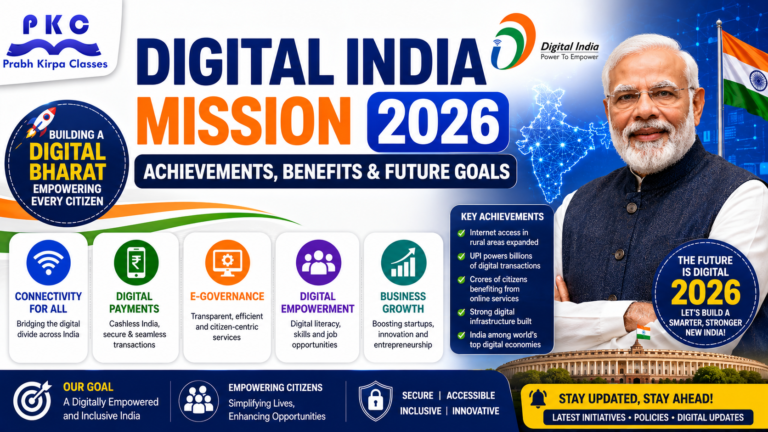
Digital India Mission 2026: Achievements, Benefits and Future Goals
Introduction
Digital transformation has become one of the most powerful drivers of economic growth and social development in the 21st century. In India, the Digital India Mission has emerged as a revolutionary initiative that is reshaping governance, business, education, healthcare, and public services. Launched with the vision of transforming India into a digitally empowered society and knowledge economy, the Digital India Mission continues to play a crucial role in the country’s development journey.
By 2026, the Digital India Mission has achieved remarkable milestones in expanding internet connectivity, promoting digital payments, improving access to government services, enhancing digital literacy, and fostering innovation. The initiative has helped bridge the gap between urban and rural India while creating new opportunities for citizens, businesses, startups, and government institutions.
As India moves towards the vision of Viksit Bharat 2047, Digital India remains a cornerstone of national development. This article explores the achievements, benefits, and future goals of the Digital India Mission in 2026.
What is Digital India Mission?
Digital India is a flagship initiative of the Government of India aimed at transforming the country into a digitally empowered society and knowledge-driven economy.
The mission focuses on three key areas:
Digital Infrastructure as a Core Utility
Providing reliable digital infrastructure to every citizen.
Governance and Services on Demand
Making government services available electronically.
Digital Empowerment of Citizens
Enhancing digital literacy and promoting digital inclusion.
The mission seeks to ensure that technology becomes accessible to every Indian, regardless of location or economic background.
Objectives of Digital India Mission
The primary objectives include:
- Expanding internet access across the country
- Improving digital governance
- Promoting digital literacy
- Enhancing cybersecurity
- Encouraging digital payments
- Supporting innovation and startups
- Providing seamless public services
- Strengthening digital infrastructure
These objectives contribute to India’s goal of becoming a globally competitive digital economy.
Major Achievements of Digital India Mission in 2026
Expansion of Internet Connectivity
One of the biggest achievements of Digital India has been the rapid expansion of internet connectivity.
Rural and remote areas that previously had limited internet access are now connected through broadband and mobile networks.
Impact
- Increased access to information
- Better communication services
- Improved educational opportunities
- Enhanced access to government programs
Internet connectivity has become a vital tool for economic and social development.
Growth of Digital Payments
India has witnessed a massive increase in digital payment adoption.
Digital payment platforms have transformed the way citizens conduct financial transactions.
Benefits
- Faster transactions
- Greater transparency
- Reduced dependence on cash
- Enhanced financial inclusion
Small businesses, vendors, and consumers now benefit from convenient and secure payment systems.
E-Governance Transformation
Digital India has significantly improved the delivery of government services.
Citizens can now access numerous services online, including:
- Certificates
- Licenses
- Tax-related services
- Welfare schemes
- Public grievance systems
Advantages
- Reduced paperwork
- Faster service delivery
- Increased transparency
- Improved accountability
E-governance has simplified interactions between citizens and government institutions.
Digital Education Initiatives
Education has become more accessible through digital platforms.
Government-supported digital learning initiatives have expanded opportunities for students across India.
Key Benefits
- Online learning resources
- Remote education opportunities
- Skill development programs
- Access to quality educational content
Students from rural areas now have better access to educational materials and learning platforms.
Healthcare Digitization
The healthcare sector has benefited greatly from digital transformation.
Digital health initiatives support:
- Electronic health records
- Telemedicine services
- Digital consultations
- Health information management
Impact
- Improved healthcare accessibility
- Faster diagnosis and treatment
- Better patient management
- Increased efficiency in healthcare delivery
Digital healthcare solutions are particularly beneficial in rural and underserved regions.
Digital Public Infrastructure
India has developed one of the world’s most advanced digital public infrastructures.
This infrastructure supports:
- Digital identity systems
- Digital payments
- Government service delivery
- Digital document management
The integration of digital platforms has improved efficiency across multiple sectors.
Promotion of Startups and Innovation
Digital India has created a supportive environment for startups and innovation.
Technology entrepreneurs benefit from:
- Access to digital infrastructure
- Government support programs
- Innovation ecosystems
- Startup-friendly policies
India’s startup ecosystem continues to grow rapidly due to increased digital adoption.
Benefits of Digital India Mission
Improved Access to Government Services
Citizens can access essential services without visiting government offices.
Benefits include:
- Time savings
- Reduced costs
- Greater convenience
- Enhanced transparency
Financial Inclusion
Digital platforms have expanded access to banking and financial services.
Benefits include:
- Digital banking
- Online transactions
- Direct benefit transfers
- Financial literacy
Millions of citizens now participate in the formal financial system.
Employment Opportunities
Digital transformation has generated employment in:
- Information technology
- Software development
- Digital marketing
- E-commerce
- Cybersecurity
The growing digital economy continues to create new career opportunities.
Economic Growth
Digital technologies improve productivity and efficiency across industries.
Benefits include:
- Increased business competitiveness
- Enhanced innovation
- Improved operational efficiency
- Greater investment opportunities
Digitalization contributes significantly to economic development.
Empowerment of Rural Communities
Digital India has reduced the digital divide between urban and rural areas.
Benefits include:
- Access to information
- Online education
- Digital healthcare
- E-commerce opportunities
Rural citizens can now participate more actively in the digital economy.
Transparency and Accountability
Digital systems help reduce corruption and improve governance.
Advantages include:
- Better record management
- Faster service delivery
- Transparent transactions
- Reduced administrative delays
Technology enables more efficient and accountable public administration.
Digital India and Artificial Intelligence
Artificial Intelligence (AI) is becoming a major component of India’s digital strategy.
The government is promoting AI applications in:
- Healthcare
- Agriculture
- Education
- Governance
- Manufacturing
AI-driven solutions are expected to improve productivity and service delivery across sectors.
Cybersecurity and Digital Safety
As digital adoption grows, cybersecurity becomes increasingly important.
Government initiatives focus on:
- Data protection
- Cyber awareness
- Secure digital platforms
- Cybercrime prevention
Strengthening cybersecurity ensures trust and confidence in digital systems.
Role of Digital India in Education
Digital India supports educational transformation through:
Online Learning Platforms
Students can access educational resources from anywhere.
Digital Classrooms
Technology-enabled classrooms improve learning experiences.
Skill Development Programs
Digital skills training prepares youth for future jobs.
Educational Accessibility
Technology reduces barriers to education for underserved communities.
These initiatives contribute to a more inclusive and knowledge-driven society.
Role of Digital India in Healthcare
Healthcare services continue to evolve through digital technologies.
Telemedicine
Patients can consult doctors remotely.
Health Data Management
Digital records improve patient care.
Improved Accessibility
Healthcare services reach remote areas more effectively.
Faster Service Delivery
Technology streamlines healthcare operations and decision-making.
Digital healthcare plays a critical role in improving public health outcomes.
Future Goals of Digital India Mission
Universal Internet Connectivity
The government aims to ensure high-speed internet access for every citizen.
Advanced Digital Infrastructure
Future investments will strengthen:
- Broadband networks
- Data centers
- Cloud infrastructure
- Digital platforms
Increased Digital Literacy
Efforts will continue to improve digital skills among citizens.
AI and Emerging Technologies
India aims to become a global leader in:
- Artificial Intelligence
- Machine Learning
- Robotics
- Data Analytics
Smart Governance
Government services will become more efficient through advanced digital technologies.
Strengthened Cybersecurity
Enhanced cybersecurity measures will protect digital assets and user data.
Support for Innovation
Continued support for startups and innovation ecosystems will drive economic growth.
Digital India and Viksit Bharat 2047
The Digital India Mission plays a crucial role in achieving the vision of Viksit Bharat 2047.
Digital technologies support:
- Economic growth
- Social inclusion
- Good governance
- Innovation
- Sustainable development
By leveraging technology effectively, India can accelerate its progress toward becoming a developed nation.
Importance for Competitive Exams
Digital India is an important topic for:
- UPSC
- SSC
- Banking Exams
- Railway Exams
- State PSC Exams
- Defence Exams
Candidates should understand:
- Objectives
- Achievements
- Benefits
- Future goals
- Digital governance initiatives
Questions related to Digital India frequently appear in current affairs and general awareness sections.
Conclusion
The Digital India Mission has transformed the way citizens interact with technology, government services, financial systems, education, and healthcare. By 2026, the initiative has achieved significant progress in expanding connectivity, promoting digital inclusion, strengthening governance, and fostering innovation.
As India continues its digital transformation journey, future goals such as universal internet access, AI adoption, cybersecurity enhancement, and smart governance will further strengthen the nation’s digital ecosystem. The Digital India Mission remains a powerful catalyst for economic growth, social empowerment, and national development.
With continued investments in technology and digital infrastructure, Digital India will play a vital role in realizing the vision of Viksit Bharat 2047 and establishing India as a global digital powerhouse.
Newsletter
Recent Posts

Major National Awards and Honours Presented by President Droupadi Murmu
## Introduction Awards and honours play a crucial role in
Digital India Mission 2026: Achievements, Benefits and Future Goals
Introduction Digital transformation has become one of the most powerful

PM Narendra Modi’s Latest Initiatives in 2026: Key Government Announcements Explained
Introduction Prime Minister Narendra Modi continues to play a significant

Master Salesforce CRM: Complete Admin, Developer & Integration Training
In today’s competitive business world, companies need powerful tools to