
Salesforce Career Roadmap 2026: Complete Guide for Beginners to Become a Salesforce Professional
## Introduction
The technology industry continues to evolve rapidly, creating exciting career opportunities for professionals with in-demand skills. Among the most promising career options today is Salesforce, the world’s leading Customer Relationship Management (CRM) platform. Used by organizations of all sizes, Salesforce helps businesses manage customers, automate processes, improve productivity, and drive growth.
As more companies adopt Salesforce solutions, the demand for skilled Salesforce professionals continues to increase. From fresh graduates and career changers to experienced IT professionals, individuals from various backgrounds are choosing Salesforce as a pathway to a rewarding and future-proof career.
However, many beginners often ask the same question: **”How do I start a career in Salesforce?”**
This comprehensive roadmap will guide you step-by-step from beginner level to becoming a successful Salesforce professional in 2026.
—
# Why Choose Salesforce as a Career?
Salesforce is one of the fastest-growing technologies in the world.
Organizations use Salesforce for:
* Customer Relationship Management
* Sales Automation
* Customer Service
* Marketing Automation
* Data Management
* Business Analytics
As businesses continue investing in cloud technologies, Salesforce professionals remain in high demand.
### Benefits of Choosing Salesforce
* High demand worldwide
* Attractive salary packages
* Multiple career paths
* Beginner-friendly learning curve
* Remote job opportunities
* Global certifications
* Strong community support
These advantages make Salesforce one of the most promising technology careers in 2026.
—
# Understanding the Salesforce Ecosystem
Before starting your journey, it is important to understand the Salesforce ecosystem.
Salesforce is not just one product.
It consists of multiple cloud solutions including:
### Sales Cloud
Helps organizations manage leads, opportunities, and sales processes.
### Service Cloud
Supports customer service and case management.
### Marketing Cloud
Manages digital marketing campaigns.
### Experience Cloud
Builds customer and partner portals.
### Data Cloud
Unifies customer data from multiple sources.
### Industry Clouds
Specialized solutions for healthcare, finance, education, and more.
Understanding the ecosystem helps you identify your preferred career path.
—
# Step 1: Learn Salesforce Fundamentals
Every beginner should start by learning the basics.
### Important Concepts
* What is CRM?
* What is Salesforce?
* Cloud Computing Basics
* Salesforce Architecture
* Salesforce Navigation
* App Launcher
* Salesforce Objects
These concepts create a strong foundation for future learning.
—
# Step 2: Master Salesforce Administration
Salesforce Administration is the best starting point for beginners.
Administrators manage and configure Salesforce environments.
### Topics to Learn
#### Objects and Fields
* Standard Objects
* Custom Objects
* Standard Fields
* Custom Fields
#### Security
* Profiles
* Roles
* Permission Sets
* Sharing Rules
#### User Management
* Creating Users
* Managing Access
* Login Security
#### Data Management
* Data Import Wizard
* Data Loader
* Data Export
#### Reports and Dashboards
* Report Types
* Dashboards
* Analytics
Administration skills are highly valued across industries.
—
# Step 3: Learn Salesforce Automation
Automation is one of Salesforce’s most powerful capabilities.
### Flow Builder
Modern Salesforce automation relies heavily on Flow Builder.
Learn:
* Screen Flows
* Record Triggered Flows
* Scheduled Flows
* Auto-Launched Flows
### Approval Processes
Automate business approvals and workflows.
### Benefits
Automation reduces manual work and improves efficiency.
Organizations actively seek professionals with automation expertise.
—
# Step 4: Build Practical Projects
Knowledge alone is not enough.
Employers want practical experience.
### Project Ideas
#### Student Management System
Features:
* Student Records
* Attendance Tracking
* Reports
#### Employee Management System
Features:
* Employee Profiles
* Leave Requests
* Approval Processes
#### Sales Tracking Application
Features:
* Lead Management
* Opportunity Tracking
* Dashboard Reporting
Projects demonstrate your ability to solve real business problems.
—
# Step 5: Earn Salesforce Certifications
Certifications validate your knowledge.
### Salesforce Certified Administrator
Best certification for beginners.
Skills Covered:
* Configuration
* Security
* Data Management
* Reports
### Salesforce Platform App Builder
Focuses on application customization.
### Salesforce Platform Developer I
Recommended for aspiring developers.
Certifications increase credibility and improve job prospects.
—
# Step 6: Learn Salesforce Development
After mastering administration, many learners move into development.
Salesforce Developers create custom business solutions.
—
## Apex Programming
Apex is Salesforce’s programming language.
Topics include:
* Variables
* Data Types
* Operators
* Loops
* Conditional Statements
* Collections
—
## SOQL
Salesforce Object Query Language retrieves data.
Examples include:
* Basic Queries
* Relationship Queries
* Aggregate Functions
—
## Apex Triggers
Triggers automate actions when records change.
Learn:
* Before Insert
* After Insert
* Before Update
* After Update
Understanding triggers is essential for developers.
—
# Step 7: Learn Lightning Web Components (LWC)
LWC is Salesforce’s modern user interface framework.
### Key Topics
* Component Structure
* HTML
* JavaScript
* Data Binding
* Events
* Apex Integration
LWC skills are highly demanded in modern Salesforce projects.
—
# Step 8: Learn Salesforce Integrations
Organizations use multiple systems that need to communicate with Salesforce.
Integration skills are increasingly valuable.
### Topics to Learn
#### REST APIs
* API Calls
* JSON
* Authentication
#### SOAP APIs
* Enterprise Integrations
* XML Communication
#### Postman
Testing APIs and integrations.
Professionals with integration skills often command higher salaries.
—
# Step 9: Explore OmniStudio
OmniStudio is gaining popularity in industries such as:
* Telecommunications
* Healthcare
* Financial Services
### OmniStudio Components
#### OmniScripts
Create guided user experiences.
#### DataRaptors
Extract and transform data.
#### Integration Procedures
Perform server-side operations.
#### FlexCards
Build dynamic user interfaces.
OmniStudio expertise can create unique career opportunities.
—
# Step 10: Build a Professional Portfolio
A portfolio helps showcase your skills.
Include:
* Projects
* Certifications
* Screenshots
* GitHub Repositories
* Case Studies
A strong portfolio improves interview performance significantly.
—
# Step 11: Prepare for Salesforce Interviews
Interview preparation is essential.
### Common Topics
#### Administration
* Security Model
* Reports
* Automation
#### Development
* Apex
* SOQL
* Triggers
#### LWC
* Components
* Events
* Lifecycle Hooks
Practice explaining concepts with practical examples.
—
# Salesforce Career Paths in 2026
Salesforce offers multiple career options.
## Salesforce Administrator
Responsibilities:
* User Management
* Security
* Reporting
* Automation
—
## Salesforce Developer
Responsibilities:
* Apex Development
* LWC Development
* Integrations
—
## Salesforce Consultant
Responsibilities:
* Requirement Gathering
* Business Analysis
* Solution Design
—
## Salesforce Business Analyst
Responsibilities:
* Process Analysis
* Documentation
* Stakeholder Communication
—
## Integration Specialist
Responsibilities:
* API Development
* Third-Party Integrations
—
## Salesforce Architect
Responsibilities:
* Enterprise Solution Design
* Technical Leadership
Architects represent one of the highest-paying roles in the ecosystem.
—
# Essential Soft Skills for Salesforce Professionals
Technical skills alone are not enough.
Develop:
### Communication Skills
Explain solutions clearly.
### Problem-Solving Skills
Analyze and resolve business challenges.
### Team Collaboration
Work effectively with stakeholders.
### Continuous Learning
Salesforce evolves regularly.
Professionals who continue learning remain competitive.
—
# Common Mistakes Beginners Should Avoid
### Learning Without Practice
Always apply concepts through projects.
### Ignoring Certifications
Certifications improve employability.
### Skipping Fundamentals
Build a strong foundation first.
### Avoiding Development
Even administrators benefit from basic coding knowledge.
### Not Building a Portfolio
Projects demonstrate practical skills.
—
# Future of Salesforce Careers
The Salesforce ecosystem continues expanding rapidly.
Emerging areas include:
* Artificial Intelligence
* Data Cloud
* Automation
* Hyperforce
* Industry Clouds
* OmniStudio
Professionals who stay updated with these technologies will remain highly valuable.
—
# Why Salesforce Professionals Are in High Demand
Organizations need experts who can:
* Configure systems
* Automate processes
* Build applications
* Integrate platforms
* Analyze business needs
The demand for Salesforce talent continues to exceed supply in many markets.
—
# Conclusion
Salesforce offers one of the most exciting and rewarding career opportunities in today’s technology landscape. Whether you are a student, fresher, non-technical learner, or experienced professional, Salesforce provides multiple pathways for career growth and success.
By following this roadmap—learning fundamentals, mastering administration, gaining development skills, earning certifications, building projects, and preparing for interviews—you can successfully transition into the Salesforce ecosystem and build a thriving career.
The journey requires dedication, continuous learning, and hands-on practice, but the rewards include excellent job opportunities, competitive salaries, global recognition, and long-term career growth. If you’re looking for a future-proof technology career in 2026, Salesforce remains one of the best choices available.
Newsletter
Recent Posts

Daily Current Affairs 24 October 2026 | Important MCQs with Answers | GK for All Competitive Exams
Stay updated with the latest Daily Current Affairs for 24
What Did AI Access? 🤖⚠️ | CERT-In Warns About Agentic AI Risk | Current Affairs Q10
Agentic AI is creating new cybersecurity challenges as AI systems

Why Is India’s Trade Under Pressure? 📉🇮🇳 | Exports & Imports in Focus | Current Affairs Q9
India’s exports and imports are back in focus as global
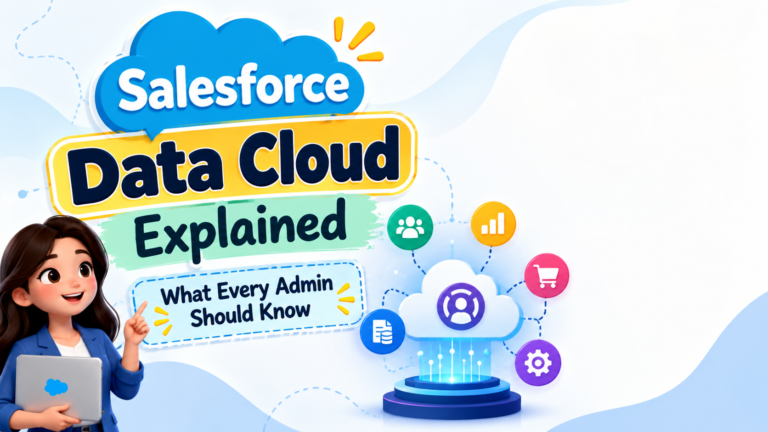
Salesforce Data Cloud Explained: What Every Admin Should Know
Modern businesses collect customer data from many different sources—CRM systems,