Introduction
The demand for Salesforce professionals continues to grow as organizations across industries adopt cloud-based CRM solutions. Businesses are actively looking for skilled Salesforce Administrators, Developers, Consultants, and Integration Specialists who can help them manage customer relationships and automate business processes.
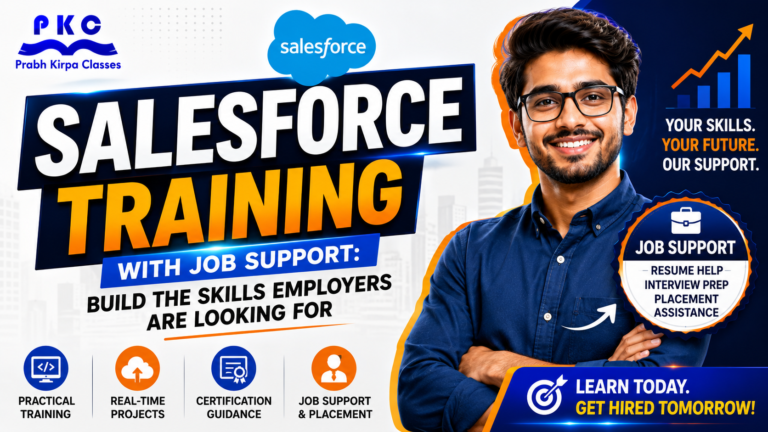
However, completing a Salesforce course is only the first step. To start a successful career, students also need practical experience, interview preparation, resume guidance, certification support, and placement assistance.
At Prabh Kirpa Classes, the training approach focuses on helping students become industry-ready by combining practical learning with career preparation. From Salesforce fundamentals to advanced topics like Apex, Lightning Web Components (LWC), Integration, and OmniStudio, learners receive comprehensive guidance to prepare for real-world opportunities.
Why Placement Assistance Matters
Many students complete technical courses but struggle to secure interviews because they lack:
- Hands-on project experience
- Resume preparation
- Interview confidence
- Understanding of real business scenarios
- Career guidance
Placement assistance helps bridge the gap between learning and employment by preparing students for the hiring process.
What Students Learn
The Salesforce training program covers:
Salesforce Administration
- CRM Fundamentals
- Objects and Fields
- Security
- Reports and Dashboards
- Flow Automation
Salesforce Development
- Apex
- SOQL
- Triggers
- Exception Handling
Lightning Web Components
- Component Development
- JavaScript
- Apex Integration
Salesforce Integration
- REST APIs
- SOAP APIs
- Authentication
- API Testing
OmniStudio
- OmniScripts
- DataRaptors
- Integration Procedures
- FlexCards
Students also work on practical assignments and real-world business scenarios.
Career Preparation
Technical knowledge alone is not enough.
Career preparation includes:
- Resume building
- LinkedIn profile guidance
- Mock interviews
- HR interview preparation
- Technical interview practice
- Communication skills
These activities help students perform confidently during interviews.
Practical Projects
Students build projects that demonstrate practical skills.
Examples include:
- Employee Management System
- Lead Management Application
- Customer Support Portal
- Student Management System
- Sales Automation Solution
Project experience strengthens both resumes and interview performance.
Placement Assistance Process
A structured placement support program typically includes:
Step 1
Complete technical training.
Step 2
Build practical projects.
Step 3
Prepare a professional resume.
Step 4
Practice technical and HR interviews.
Step 5
Apply for relevant Salesforce opportunities.
Step 6
Continue learning based on interview feedback.
Career Opportunities After Training
After completing Salesforce training, learners may apply for roles such as:
- Salesforce Administrator
- Junior Salesforce Developer
- Salesforce Consultant
- CRM Executive
- Salesforce Support Engineer
- Business Analyst
- Integration Developer
These roles are available in industries including IT, banking, healthcare, retail, education, insurance, and manufacturing.
Illustrative Student Success Stories
The following examples are fictional and are provided only to illustrate what a learner’s journey could look like. Replace them with real student stories if available.
Example 1: Aditi Sharma (Illustrative)
“I started with no Salesforce experience. The hands-on projects and interview preparation helped me understand real business scenarios and feel confident during interviews.”
Example 2: Rahul Verma (Illustrative)
“The mock interviews helped me improve my technical explanations. Building practical projects made it much easier to discuss my skills with recruiters.”
Example 3: Neha Kapoor (Illustrative)
“I appreciated the structured learning path from Salesforce Administration to Development. The resume guidance helped me present my skills more effectively.”
Skills Employers Look For
Recruiters generally value candidates who can demonstrate:
- Practical Salesforce knowledge
- Problem-solving ability
- Communication skills
- Teamwork
- Continuous learning
- Understanding of business processes
Hands-on training helps learners develop these qualities.
Why Choose Prabh Kirpa Classes?
Students benefit from:
- Structured Salesforce Training
- Practical Assignments
- Live Project Practice
- Salesforce Admin & Development
- Lightning Web Components
- Salesforce Integration
- OmniStudio Training
- Certification Guidance
- Resume Preparation
- Mock Interviews
- Placement Assistance
The objective is to prepare learners for the technical and professional expectations of the Salesforce job market.
Conclusion
Starting a career in Salesforce requires more than theoretical knowledge. Practical experience, project work, interview preparation, and career guidance all play an important role in helping learners become job-ready.
A structured training program with placement assistance can help students build confidence, strengthen technical skills, and prepare for opportunities in the growing Salesforce ecosystem. By combining hands-on learning with professional career support, learners can take meaningful steps toward building a successful career in cloud technology.