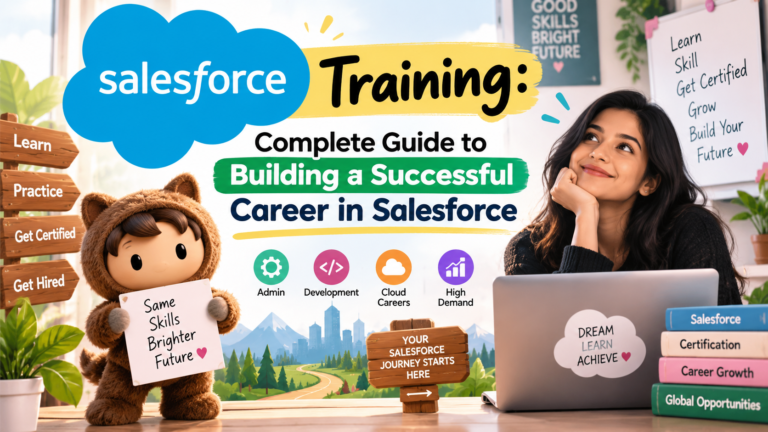
Salesforce Training: Complete Guide to Building a Successful Career in Salesforce
# Salesforce Training: Complete Guide to Building a Successful Career in Salesforce
Salesforce has become one of the world’s leading cloud-based customer relationship management (CRM) platforms, helping businesses manage sales, customer service, marketing, analytics, and many other business processes. As companies increasingly adopt cloud technologies, the demand for professionals who understand Salesforce continues to grow.
For students, freshers, IT professionals, and people looking to switch careers, Salesforce can be an excellent technology to learn. However, simply knowing the basics is not always enough. A structured learning path, practical knowledge, hands-on projects, and interview preparation can make a significant difference when starting a Salesforce career.
At **Prabh Kirpa Classes**, learners can develop Salesforce skills through structured and practical learning designed to help them understand both Salesforce concepts and their real-world applications.
## What Is Salesforce?
Salesforce is a cloud-based CRM platform that enables organizations to manage interactions with customers and automate business processes. Instead of installing traditional software on individual computers, businesses can access Salesforce through the cloud.
Salesforce provides different solutions for sales, customer service, marketing, commerce, analytics, and application development.
Some important Salesforce areas include:
* Salesforce Administration
* Salesforce Development
* Apex Programming
* Lightning Web Components (LWC)
* Salesforce Flow
* SOQL and SOSL
* Salesforce Integration
* Reports and Dashboards
* Data Management
* Security and Access Management
* Deployment and Release Management
Because Salesforce offers such a broad ecosystem, professionals can choose a career path based on their interests and technical background.
## Why Learn Salesforce?
One of the biggest reasons to learn Salesforce is the growing importance of CRM and cloud technology. Organizations of different sizes use CRM platforms to manage customer information, sales activities, support operations, and business processes.
Learning Salesforce can provide several career advantages.
### 1. Growing Cloud Technology
Cloud computing has transformed the way organizations use technology. Salesforce is one of the most established cloud platforms, making Salesforce skills valuable for organizations that rely on cloud-based CRM solutions.
### 2. Multiple Career Paths
Salesforce is not limited to one job role. Learners can explore different career options depending on their interests.
Some popular Salesforce roles include:
* Salesforce Administrator
* Salesforce Developer
* Salesforce Consultant
* Salesforce Business Analyst
* Salesforce Technical Consultant
* Salesforce Integration Developer
* Salesforce LWC Developer
* Salesforce Application Developer
This variety makes Salesforce suitable for people with different educational and professional backgrounds.
### 3. Suitable for Beginners and IT Professionals
Salesforce can be approached from both functional and technical perspectives.
Someone who enjoys configuration, business processes, user management, and reporting may consider Salesforce Administration.
Someone interested in programming can explore Salesforce Development, Apex, SOQL, LWC, integrations, and related technologies.
### 4. Strong Combination of Functional and Technical Skills
A Salesforce professional can develop both business understanding and technical expertise.
For example, a Salesforce Administrator may work with:
* Users and permissions
* Profiles
* Permission sets
* Roles
* Reports
* Dashboards
* Automation
* Data management
* Approval processes
A Salesforce Developer may additionally work with:
* Apex
* SOQL
* SOSL
* Triggers
* Lightning Web Components
* APIs
* Integrations
* Deployment
This combination can create opportunities for professionals who want to work closely with both technology and business teams.
# Salesforce Administration Training
Salesforce Administration is one of the most popular starting points for people entering the Salesforce ecosystem.
A Salesforce Administrator is responsible for configuring and maintaining Salesforce according to an organization’s business requirements.
Important topics generally include:
### Salesforce Basics
Learners first understand the Salesforce platform, navigation, objects, records, fields, applications, and relationships.
### Objects and Fields
Objects store business information in Salesforce. Learners can understand standard and custom objects, fields, field types, relationships, and object configuration.
### Security and Access
Security is an important part of Salesforce Administration.
Training can cover:
* Profiles
* Permission Sets
* Roles
* Organization-Wide Defaults
* Sharing Rules
* Field-Level Security
* Record-Level Access
Understanding these concepts helps administrators control who can access particular Salesforce data.
### Reports and Dashboards
Reports allow organizations to analyze their Salesforce data, while dashboards provide visual representations of important business information.
Learners can understand different report types, filters, charts, dashboard components, and practical reporting requirements.
### Salesforce Automation
Automation is another major part of Salesforce.
Modern Salesforce implementations can use tools such as Salesforce Flow to automate repetitive business processes.
Learners can explore:
* Screen Flow
* Record-Triggered Flow
* Autolaunched Flow
* Variables
* Assignment Elements
* Decision Elements
* Debugging
* Flow Resources
Practical understanding of automation can help learners solve real business requirements more effectively.
# Salesforce Development Training
For learners who want to enter the technical side of Salesforce, Salesforce Development provides a deeper programming-oriented career path.
Salesforce Developers work with code, data, automation, components, APIs, and integrations.
## Apex Programming
Apex is Salesforce’s programming language based on Java-like syntax.
Important Apex concepts include:
* Variables
* Data Types
* Collections
* Lists
* Sets
* Maps
* Methods
* Classes
* Constructors
* Exception Handling
* SOQL
* DML
* Triggers
Understanding collections such as Lists, Sets, and Maps is particularly important for Salesforce development.
For example, Maps can be useful when developers need to associate one value with another, such as storing records using their Salesforce IDs.
## SOQL
Salesforce Object Query Language, commonly known as SOQL, is used to retrieve data from Salesforce objects.
Learners should understand:
* SELECT statements
* WHERE conditions
* ORDER BY
* LIMIT
* Relationships
* Aggregate queries
* Parent-to-child queries
* Child-to-parent queries
Strong SOQL knowledge is important for Salesforce Developer interviews and real-world development.
## SOSL
Salesforce Object Search Language, or SOSL, is used when developers need to search across multiple objects and fields.
Understanding the difference between SOQL and SOSL is a common requirement for Salesforce developers.
# Lightning Web Components
Lightning Web Components, commonly called LWC, is Salesforce’s modern framework for building user interfaces.
LWC is based on modern web standards and uses technologies such as:
* HTML
* JavaScript
* CSS
* Salesforce Lightning platform features
Learners can understand component structure, properties, events, data binding, Apex integration, and communication between components.
Developing practical LWC projects can help learners understand how Salesforce applications are customized for real business requirements.
# Salesforce Integration
Modern organizations rarely use only one software platform. Salesforce often needs to communicate with external applications, databases, websites, payment platforms, ERP systems, or other business applications.
Salesforce integration training can introduce concepts such as:
* APIs
* REST API
* SOAP API
* HTTP requests
* Authentication
* External systems
* Data synchronization
* Integration architecture
Understanding integrations can be particularly useful for developers who want to work on enterprise-level Salesforce projects.
# Salesforce Data Management
Data is one of the most important components of any CRM platform.
Salesforce professionals need to understand how records are created, updated, imported, exported, validated, and maintained.
Important topics include:
* Data Import
* Data Export
* Data Loader
* Duplicate Management
* Validation Rules
* Data Quality
* Record Management
* Data Security
Good data management helps organizations maintain accurate and reliable customer information.
# Salesforce Approval Processes
Businesses often require approval before certain actions can be completed.
For example, a company may require manager approval before offering a special discount to a customer.
Salesforce provides tools to support such processes.
Learners can understand how approval processes work, including:
* Entry criteria
* Approval steps
* Approvers
* Approval actions
* Final approval actions
* Final rejection actions
This knowledge can help Salesforce professionals translate business requirements into Salesforce solutions.
# Salesforce Reports and Dashboards
Businesses generate large amounts of customer and sales data. Reports and dashboards help decision-makers understand that information.
Salesforce professionals can create reports to answer questions such as:
* How many opportunities are currently open?
* Which sales representatives have the highest pipeline?
* Which leads were generated recently?
* Which opportunities are close to closing?
* What is the monthly sales performance?
Dashboards can then present important information visually.
Learning reporting and dashboard functionality is valuable for administrators as well as consultants.
# Salesforce Career Opportunities
Salesforce skills can open multiple career paths.
## Salesforce Administrator
A Salesforce Administrator generally focuses on configuration, users, security, automation, reporting, and data management.
## Salesforce Developer
Developers work with Apex, SOQL, triggers, LWC, APIs, integrations, and custom functionality.
## Salesforce Consultant
Consultants work closely with businesses to understand requirements and design Salesforce solutions.
## Salesforce Business Analyst
Business analysts focus on understanding business processes, gathering requirements, documenting workflows, and helping teams translate business needs into Salesforce solutions.
## Salesforce Integration Developer
Integration-focused professionals work on connecting Salesforce with external applications and services.
Choosing the right role depends on an individual’s interests, technical background, communication skills, and career goals.
# Salesforce Certification
Salesforce certifications can help professionals demonstrate their knowledge of specific Salesforce areas.
Depending on career goals, learners may explore certifications related to administration, development, architecture, or specialized Salesforce products.
However, certification should ideally be supported by practical knowledge. Understanding concepts only for an exam may not be sufficient when working on real projects.
A strong Salesforce learning strategy should combine:
**Concepts + Practical Training + Projects + Interview Preparation + Certification Preparation**
# Why Practical Salesforce Training Matters
Reading Salesforce concepts is useful, but practical implementation is equally important.
For example, understanding the definition of a Flow is different from actually creating a Flow that automatically updates records based on a business condition.
Similarly, knowing what Apex is differs from writing Apex code that performs a real business requirement.
Practical training can help learners:
* Understand real-world requirements
* Build Salesforce configurations
* Write Apex code
* Create Flows
* Develop LWC components
* Work with Salesforce data
* Debug errors
* Understand deployment
* Prepare for technical interviews
This is why hands-on learning should be an important part of a Salesforce training journey.
# Salesforce Training for Freshers
Freshers often worry that Salesforce is only suitable for experienced IT professionals. However, beginners can also build a Salesforce career by following a structured learning path.
A beginner-friendly roadmap could look like this:
**Step 1:** Understand Salesforce fundamentals
**Step 2:** Learn Salesforce Administration
**Step 3:** Practice security and access management
**Step 4:** Learn reports and dashboards
**Step 5:** Understand Salesforce Flow
**Step 6:** Build practical projects
**Step 7:** Explore Apex and SOQL
**Step 8:** Learn LWC
**Step 9:** Understand APIs and integrations
**Step 10:** Prepare for interviews and certifications
Consistent practice is more important than trying to learn everything at once.
# Salesforce Training for Working Professionals
Working professionals may choose Salesforce to expand their existing technical or business skills.
For example, professionals from software development backgrounds may find Apex, LWC, integrations, and APIs particularly interesting.
Professionals from business analysis, sales operations, customer support, or administration backgrounds may find Salesforce Administration and business process automation relevant.
The key is to select a learning path based on existing experience and career goals.
# Salesforce Job Interview Preparation
Learning Salesforce concepts is only one part of career preparation. Interview preparation is equally important.
Candidates should be prepared for conceptual, scenario-based, and practical questions.
Common interview areas include:
* Profiles vs Permission Sets
* Roles and Profiles
* OWD
* Sharing Rules
* Lookup vs Master-Detail Relationships
* Junction Objects
* Validation Rules
* Workflow and Flow
* Reports and Dashboards
* SOQL vs SOSL
* Apex Collections
* Triggers
* Governor Limits
* LWC
* APIs
* Integration
* Deployment
Scenario-based questions are particularly important because Salesforce interviews often test how candidates approach business requirements.
# Why Choose Prabh Kirpa Classes for Salesforce Learning?
Choosing the right learning environment can make the learning journey more structured.
**Prabh Kirpa Classes** focuses on Salesforce-related educational content and practical learning. Learners can explore Salesforce concepts ranging from Administration and Development to Flow, Apex, LWC, integrations, and interview-oriented topics.
The goal of Salesforce learning should not simply be to memorize definitions. Instead, learners should understand why a feature is used, how it works, and where it can be applied.
A structured approach can help learners gradually move from Salesforce fundamentals to advanced concepts.
# Start Your Salesforce Learning Journey
Salesforce offers a broad ecosystem with opportunities across administration, development, consulting, analysis, automation, integration, and other specialized areas.
Whether you are a fresher, an IT professional, a developer, or someone considering a career transition, learning Salesforce can be a valuable step toward developing modern cloud technology skills.
The most effective approach is to learn systematically, practice regularly, work on realistic requirements, and continuously improve your understanding.
Start with Salesforce fundamentals, build a strong foundation in Administration, explore automation and data management, and then move toward Development, Apex, SOQL, LWC, and Integration according to your career goals.
With consistent learning and practical exposure, Salesforce can become more than just a technology you study—it can become a professional skillset that helps you pursue opportunities in the growing CRM and cloud ecosystem.
**Learn. Practice. Build. Prepare. Grow with Salesforce.**
**Prabh Kirpa Classes** — Learn Salesforce concepts with a practical, career-focused approach.
Newsletter
Recent Posts
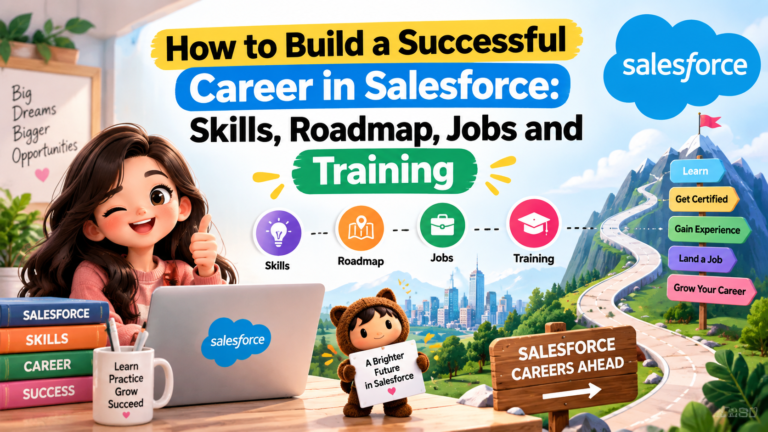
How to Build a Successful Career in Salesforce: Skills, Roadmap, Jobs and Training
The technology industry is constantly evolving, and businesses are increasingly
Salesforce Training: Complete Guide to Building a Successful Career in Salesforce
# Salesforce Training: Complete Guide to Building a Successful Career

What Is the Dual Mandate of the US Federal Reserve? | Price Stability & Maximum Employment
What does the US Federal Reserve’s statutory Dual Mandate balance
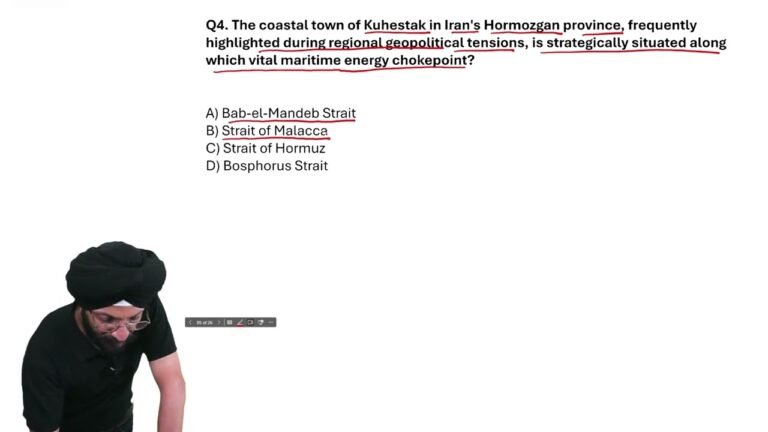
Kuhestak in Iran Is Located Near Which Vital Maritime Energy Chokepoint? | Current Affairs
Where is Kuhestak, the coastal town in Iran’s Hormozgan province,