Salesforce Training and Career Guide: How to Build a Successful Career in Salesforce
Salesforce has become one of the most widely used customer relationship management (CRM) platforms in the world. From startups to large enterprises, businesses use Salesforce to manage customer relationships, automate processes, analyze data, and improve sales and service operations.
As businesses continue to adopt cloud-based technologies, the demand for professionals with Salesforce skills is also growing. This makes **Salesforce training** an attractive career option for students, freshers, IT professionals, and working professionals looking to upgrade their skills.
At **Prabh Kirpa Classes**, learners can build practical knowledge of Salesforce through structured training covering areas such as Salesforce Administration, Development, Apex, Lightning Web Components (LWC), Flow and Automation, and other important Salesforce technologies.
If you are considering a career in Salesforce, this guide will help you understand what Salesforce is, which skills you need, what career opportunities are available, and how proper Salesforce training can help you become job-ready.
## What Is Salesforce?
Salesforce is a cloud-based CRM platform that helps organizations manage customer information, sales activities, marketing processes, customer service, and business operations.
Instead of maintaining customer data across different spreadsheets and systems, companies can use Salesforce to centralize information and create automated workflows.
Salesforce is also highly customizable. Organizations can configure the platform according to their business requirements, while developers can build custom applications and functionality using Salesforce technologies.
Some common Salesforce areas include:
* Salesforce Sales Cloud
* Salesforce Service Cloud
* Salesforce Experience Cloud
* Salesforce Marketing Cloud
* Salesforce Platform
* Salesforce Data Cloud
* Salesforce Industries
* Salesforce Flow
* Apex
* Lightning Web Components
This wide ecosystem creates opportunities for professionals with different technical and functional backgrounds.
## Why Learn Salesforce?
One of the biggest advantages of learning Salesforce is that it offers multiple career paths.
You do not necessarily need to become a hardcore programmer to enter the Salesforce ecosystem. Depending on your interests and background, you can explore administration, development, automation, consulting, business analysis, or other Salesforce-related roles.
### 1. Multiple Career Paths
Salesforce provides opportunities for both technical and non-technical professionals.
For example:
* Salesforce Administrator
* Salesforce Developer
* Salesforce Business Analyst
* Salesforce Consultant
* Salesforce QA/Tester
* Salesforce Technical Consultant
* Salesforce Application Developer
This flexibility allows learners to choose a path based on their skills and career goals.
### 2. Strong Business Relevance
Salesforce is not simply a programming technology. It is closely connected to real business processes.
A Salesforce professional may work on customer management, sales processes, service operations, reporting, automation, or application development.
Understanding both technology and business processes can therefore be valuable for Salesforce professionals.
### 3. Cloud-Based Technology
Cloud computing has transformed the way organizations build and manage software systems.
Salesforce operates primarily through the cloud, allowing organizations to access applications and customer information without maintaining traditional infrastructure for every application.
Learning Salesforce can therefore help professionals develop experience with modern cloud-based business applications.
### 4. Continuous Learning
The Salesforce ecosystem continues to evolve with new platform capabilities, automation features, development tools, data technologies, and AI-related functionality.
This creates an environment where professionals can continuously upgrade their skills.
## Salesforce Career Paths You Can Explore
Before starting your training, it is useful to understand the major career paths available.
### Salesforce Administrator
A Salesforce Administrator works primarily with Salesforce configuration, user management, data management, security, reports, dashboards, and automation.
Typical responsibilities may include:
* Creating and managing users
* Managing permissions
* Configuring objects and fields
* Creating reports and dashboards
* Managing data
* Building automation
* Maintaining Salesforce functionality
This path can be suitable for learners who want to understand Salesforce from a functional and administrative perspective.
### Salesforce Developer
Salesforce Developers work on custom functionality and applications.
They may use technologies such as:
* Apex
* Lightning Web Components
* SOQL
* SOSL
* APIs
* Salesforce development tools
Developers often work on requirements that cannot be solved entirely through standard configuration.
### Salesforce Consultant
A Salesforce Consultant helps organizations understand their business requirements and implement Salesforce solutions.
Consultants may work closely with business teams, administrators, developers, and stakeholders.
Strong communication, analytical thinking, Salesforce knowledge, and understanding of business processes can be important for this career path.
### Salesforce Business Analyst
A Salesforce Business Analyst focuses on understanding business requirements and translating them into Salesforce solutions.
Typical activities can include:
* Requirement gathering
* Process analysis
* Documentation
* User story creation
* Stakeholder communication
* Solution analysis
* Testing coordination
This can be an interesting option for professionals who enjoy business processes and communication.
## Important Salesforce Skills to Learn
A successful Salesforce learning journey should go beyond memorizing definitions.
You should focus on understanding how Salesforce works and how its different components connect with each other.
### Salesforce Administration
Administration is an important foundation for Salesforce learners.
Key topics include:
* Objects
* Fields
* Relationships
* Profiles
* Permission Sets
* Roles
* Sharing Settings
* Data Management
* Reports
* Dashboards
* Validation Rules
* Approval Processes
* Automation
A strong understanding of administration can make it easier to learn advanced Salesforce concepts later.
### Salesforce Flow and Automation
Automation is an important part of Salesforce.
Salesforce Flow can be used to automate business processes and reduce repetitive manual work.
Learners should understand concepts such as:
* Record-triggered flows
* Screen flows
* Scheduled flows
* Variables
* Decisions
* Assignments
* Loops
* Get Records
* Create Records
* Update Records
* Delete Records
Practical exercises are particularly useful when learning Flow because understanding the logic is more important than simply memorizing the terminology.
### Apex
Apex is Salesforce’s programming language and is based on Java-like syntax.
It is used when declarative tools are not sufficient for implementing a particular business requirement.
Important Apex concepts include:
* Variables
* Data types
* Collections
* Classes
* Methods
* Triggers
* SOQL
* DML
* Exception handling
* Test classes
For aspiring Salesforce Developers, Apex is an important technical skill.
### Lightning Web Components
Lightning Web Components, commonly called LWC, is Salesforce’s modern framework for creating user interfaces and custom components.
LWC development involves concepts such as:
* HTML
* JavaScript
* CSS
* Components
* Properties
* Events
* Data binding
* Apex integration
* Lightning Data Service
Learning LWC can help developers build modern Salesforce user experiences.
## Apex vs LWC: Why Learn Both?
Apex and LWC serve different purposes.
Apex is primarily used for server-side logic, data processing, and backend functionality.
LWC is primarily used to create interactive user interfaces and client-side functionality.
In many Salesforce development projects, these technologies work together.
For example, an LWC component may collect information from a user while Apex handles complex server-side processing.
Understanding how the frontend and backend communicate can therefore be an important part of becoming a Salesforce Developer.
## Salesforce Reports and Dashboards
Data is one of the most important assets for any organization.
Salesforce Reports and Dashboards allow organizations to turn CRM data into useful business information.
Professionals should understand:
* Tabular Reports
* Summary Reports
* Matrix Reports
* Joined Reports
* Filters
* Grouping
* Charts
* Dashboard Components
* Report Types
For example, a sales team may use a dashboard to monitor opportunities, sales performance, pipeline value, and other business metrics.
Learning reporting and analytics can therefore help Salesforce professionals understand how CRM data supports business decisions.
## Who Can Learn Salesforce?
Salesforce is not limited to experienced software developers.
Different types of learners can explore Salesforce based on their existing skills.
### Freshers
Fresh graduates can use Salesforce training to develop practical technology skills and understand CRM concepts.
Instead of learning only theoretical concepts, freshers should focus on hands-on exercises, projects, and problem-solving.
### Working Professionals
IT professionals can learn Salesforce to expand their existing technology skill set.
Professionals from development, testing, support, business analysis, or other technical backgrounds may find Salesforce useful as an additional specialization.
### Non-Technical Professionals
Some Salesforce career paths are more configuration- and business-oriented than programming-heavy.
Professionals who are comfortable with business processes, communication, analysis, and technology can explore Salesforce Administration, Business Analysis, or Consulting.
## How to Become Job-Ready in Salesforce
Learning Salesforce is a process. A structured approach can make the journey easier.
### Step 1: Understand CRM Fundamentals
Start by understanding what CRM means and why businesses use Salesforce.
Learn how customers, leads, accounts, contacts, opportunities, cases, and other business records are managed.
### Step 2: Learn Salesforce Administration
Build a strong foundation in configuration, security, data management, reports, dashboards, and automation.
### Step 3: Practice Salesforce Flow
Learn how business processes can be automated using Flow.
Try creating practical automation scenarios instead of only watching tutorials.
### Step 4: Learn Development Concepts
If your goal is Salesforce Development, move into Apex, SOQL, DML, triggers, test classes, and LWC.
### Step 5: Build Projects
Projects are extremely useful for connecting theoretical knowledge with real-world scenarios.
For example, you could create a Salesforce application for:
* Lead management
* Employee onboarding
* Customer support
* Sales opportunity tracking
* Service request management
### Step 6: Prepare for Interviews
Interview preparation should cover both conceptual and practical questions.
You should be prepared to explain not only *what* a Salesforce feature does but also *when and why* you would use it.
## Why Practical Salesforce Training Matters
Watching videos and reading documentation can introduce you to Salesforce, but practical implementation is important for developing confidence.
For example, learning the definition of a Record-Triggered Flow is different from actually creating one.
Similarly, understanding what Apex is does not automatically mean you can write an Apex class or trigger.
Practical training should therefore include:
* Hands-on exercises
* Realistic business scenarios
* Configuration practice
* Coding practice
* Projects
* Debugging
* Interview preparation
This approach helps learners understand how Salesforce concepts are applied in real projects.
## Salesforce Certifications
Salesforce offers professional certifications covering different areas of the ecosystem.
Some certifications focus on administration, while others are designed around development, architecture, consulting, and specialized Salesforce products.
Certification preparation can help learners organize their knowledge and identify areas where they need additional practice.
However, certification should ideally be combined with practical skills.
Knowing concepts for an exam and being able to apply those concepts in a project are two different abilities.
## Why Choose Prabh Kirpa Classes for Salesforce Training?
At **Prabh Kirpa Classes**, the focus is on helping learners understand Salesforce concepts in a structured and practical way.
The training covers important areas such as Salesforce Administration, Development, Apex, Lightning Web Components, Flow and Automation, and related Salesforce concepts.
The learning approach is designed for people who want to build their understanding from fundamentals toward job-oriented skills.
Whether you are a fresher exploring Salesforce or a working professional looking to expand your technical knowledge, structured training can provide a clear learning path.
The goal should not simply be to complete a course. The objective should be to understand Salesforce, practice its tools, work on projects, and become confident enough to discuss and implement Salesforce solutions.
## Common Mistakes Salesforce Learners Should Avoid
### Mistake 1: Learning Only Theory
Salesforce is a practical platform. Reading definitions without implementation can make advanced concepts difficult.
### Mistake 2: Ignoring Fundamentals
Jumping directly into advanced development without understanding Salesforce objects, relationships, security, and automation can create gaps in knowledge.
### Mistake 3: Avoiding Projects
Projects help you understand how different Salesforce features work together.
### Mistake 4: Focusing Only on Certification
Certification can be valuable, but practical Salesforce knowledge is also important for building a career.
### Mistake 5: Not Practicing Regularly
Consistency matters. Regular practice can help reinforce concepts and improve problem-solving ability.
## Future of Salesforce Careers
The Salesforce ecosystem continues to evolve alongside cloud computing, automation, data, and artificial intelligence.
Professionals are increasingly expected to understand not only CRM configuration or development but also how automation, data, and intelligent technologies can support business processes.
This means Salesforce learners should adopt a continuous-learning mindset.
Instead of asking, “What is the one skill I need to learn?”, a better approach is to build a combination of:
**Salesforce + Business Understanding + Automation + Development + Data + Problem Solving**
The exact combination will depend on your chosen career path.
## Final Thoughts
Salesforce offers multiple opportunities for people interested in cloud technology, CRM, automation, development, and business applications.
Whether you are a fresher, IT professional, developer, tester, business analyst, or someone looking to transition into a technology-focused career, learning Salesforce can help you develop a valuable set of skills.
The key is to follow a structured learning path, understand the fundamentals, practice regularly, build projects, and continue upgrading your knowledge.
With the right **Salesforce training**, practical exposure, and consistent effort, you can build a strong foundation for exploring Salesforce career opportunities.
**Ready to start learning Salesforce?**
Explore Salesforce training with **Prabh Kirpa Classes** and start building skills in Salesforce Administration, Development, Apex, LWC, Flow & Automation, and more.
### Frequently Asked Questions About Salesforce Training
**Q1. Is Salesforce difficult to learn?**
Salesforce has many components, but beginners can start with fundamentals and gradually move toward advanced administration or development concepts.
**Q2. Can freshers learn Salesforce?**
Yes. Freshers can begin with Salesforce fundamentals and gradually develop administration, automation, or development skills.
**Q3. Do I need coding knowledge to learn Salesforce?**
Not for every Salesforce career path. Administration and many declarative features can be learned without extensive programming. Development roles require coding skills such as Apex and JavaScript.
**Q4. What should I learn first in Salesforce?**
Start with CRM fundamentals and Salesforce Administration. After developing a strong foundation, you can move into Flow, Apex, LWC, or specialized Salesforce areas depending on your career goal.
**Q5. Is Salesforce useful for working professionals?**
Yes. Working professionals can use Salesforce training to add cloud CRM, automation, development, or business-analysis skills to their existing experience.
**Q6. Should I learn Apex and LWC together?**
For aspiring Salesforce Developers, learning both can be useful because Apex handles server-side logic while LWC is used to build modern user interfaces.
**Q7. Are projects important for Salesforce careers?**
Yes. Projects provide opportunities to apply Salesforce concepts to realistic business scenarios and demonstrate practical understanding.
Newsletter
Recent Posts

Salesforce Career in 2026: Skills, Job Roles, Training and How to Become Job-Ready
The demand for cloud-based business technologies has transformed the IT

Salesforce Training and Career Guide: How to Build a Successful Career in Salesforce
Salesforce has become one of the most widely used

16 September Current Affairs 2026 | Q2: INS Sudarshini Reached Livorno Under Which Expedition? | SSC
16 September 2026 Current Affairs — Q2!
Q2. INS Sudarshini
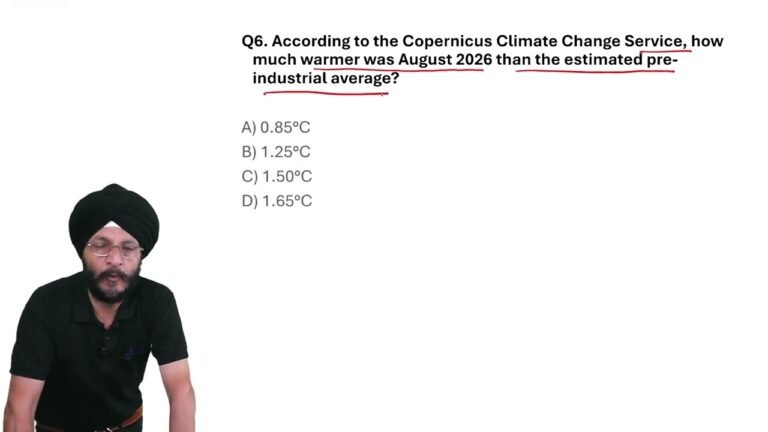
16 September Current Affairs 2026 | Q6: August 2026 Temperature 1.65°C Above Pre-Industrial Average
🔥 16 September 2026 Current Affairs — Q6!
Q6. According