Delhi Diwali Pollution 2026 | PM2.5 Levels Exceeded WHO Safe Limit by 332 Times! | Current Affairs
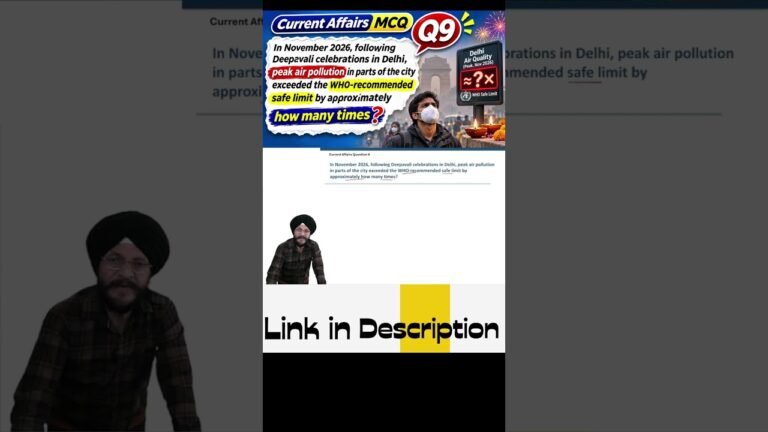
Delhi witnessed an alarming rise in air pollution following Diwali celebrations in November 2026. Several parts of the national capital recorded extremely high concentrations of PM2.5, raising serious concerns about public health and air quality.
In this video, we discuss the pollution spike and compare the recorded levels with the World Health Organization’s (WHO) recommended air-quality guideline.
Current Affairs MCQ:
Question: In November 2026, following Deepavali celebrations in Delhi, peak air pollution in parts of the city exceeded the WHO-recommended safe limit by approximately how many times?
Correct Answer: Approximately 332 Times
Important Information:
Location: Delhi, India.
Occasion: Diwali 2026.
Major Pollutant: PM2.5 (Fine Particulate Matter).
Highest Reported Reading: Approximately 4,985 µg/m³ at Jahangirpuri.
WHO 24-hour Guideline for PM2.5: 15 µg/m³.
Reported Comparison: More than 332 times the WHO guideline.
Understanding PM2.5:
PM2.5 refers to fine particulate matter with a diameter of 2.5 micrometres or less. These particles can penetrate deep into the lungs and may even enter the bloodstream.
Why Did Delhi’s Pollution Increase?
Firecracker emissions during Diwali celebrations.
Vehicular emissions.
Industrial pollution.
Construction dust.
Crop-residue burning in neighbouring states.
Unfavourable weather conditions, including weak winds that prevent pollutants from dispersing.
Important Static GK – WHO Air Quality Guidelines:
Subscribe to Current Affairs Studio for daily current affairs MCQs, environmental updates, government policies and exam-oriented explanations.
Delhi air pollution November 2026, Delhi Diwali pollution 2026, WHO safe limit PM2.5, PM2.5 332 times WHO limit, Jahangirpuri pollution, Delhi air quality, air pollution current affairs, WHO air quality guidelines, particulate matter PM2.5, environmental current affairs 2026, Diwali firecracker pollution, November 2026 current affairs, Current Affairs MCQ, Current Affairs Studio