
Salesforce Agentforce + Siemens: The Future of Industrial Automation?
The industrial world is entering a new phase of digital transformation. For decades, manufacturers have invested in automation, connected machines, industrial software, digital twins, IoT, and data analytics. Now, artificial intelligence is adding another layer: AI agents that can understand business context, make decisions, perform tasks, and collaborate with people and other systems.
A recent development between Salesforce and Siemens illustrates where this transformation could be heading. On September 15, 2026, the two companies announced an expansion of their partnership that combines Salesforce Agentforce with Siemens Teamcenter Service Lifecycle Management (SLM). The goal is to bring engineering-grade product information directly into sales, service, and customer workflows.
This raises an important question:
Could the combination of Agentforce and Siemens technology become a model for the next generation of industrial automation?
The answer depends on how we define automation. This is not simply about robots operating machines on a factory floor. It is about automating the information, decision-making, sales, service, and customer processes surrounding industrial products.
What Is Salesforce Agentforce?
Salesforce Agentforce is Salesforce’s platform for building and deploying AI agents that can interact with business data, workflows, and applications.
Traditional automation usually follows predefined rules:
If X happens → perform Y.
AI agents can work with more flexible situations. They can interpret requests, retrieve relevant information, reason over available context, and take actions according to configured business rules and permissions.
In an industrial organization, that could mean an AI agent helping a salesperson identify the right product, assisting a technician in finding a replacement part, or handling an incoming customer request before involving a human employee.
Salesforce has positioned Agentforce as an agentic layer across CRM and business workflows. In manufacturing, Salesforce describes Agentforce as a way to connect sales, service, and back-office operations while using AI agents to automate routine processes.
The important point is that Agentforce is not intended to operate in isolation. Its value comes from connecting AI agents to trusted enterprise data, workflows, business logic, and actions.
That becomes particularly interesting when the AI agent can also access detailed engineering and product information.
Why Siemens Is an Important Partner
Siemens operates across industrial automation, infrastructure, mobility, healthcare, electrification, and digitalization. Its industrial ecosystem includes technologies used to design, manufacture, operate, and service complex products and systems.
One of the key technologies in the Salesforce-Siemens collaboration is Siemens Teamcenter.
Teamcenter is Siemens’ product lifecycle management platform. It can contain information associated with products, engineering processes, configurations, lifecycle management, and other product-related information.
This creates an interesting division of responsibilities:
Salesforce → customer, sales, service, and business context
Siemens → engineering and product context
Agentforce → AI-driven interaction and orchestration
The new collaboration aims to connect these worlds. Siemens says the partnership combines Teamcenter’s industrial digital twin capabilities with Salesforce Agentforce to bring engineering-grade answers into sales, service, and customer workflows.
The Big Shift: From CRM Automation to Industrial Intelligence
Traditional CRM systems primarily answer questions such as:
Who is the customer?
What did they purchase?
What opportunities are open?
When was the last interaction?
What service request is pending?
Industrial organizations need another category of information:
Which product configuration does the customer have?
Which component is installed?
Which replacement part is compatible?
Is a requested upgrade technically valid?
Which configuration can actually be manufactured?
What engineering information is relevant to the customer’s problem?
Historically, answering these questions could require communication between sales, customer service, engineering, product teams, and field technicians.
That creates delays.
The Salesforce-Siemens approach is designed to bring relevant engineering information closer to the people who need it.
For example, Siemens and Salesforce describe scenarios where a service technician could identify the appropriate spare part for a particular serial number before visiting the site, while a salesperson could determine whether a proposed upgrade is technically valid and manufacturable.
This is where the idea of agentic industrial automation becomes significant.
How Agent-to-Agent AI Could Change Industrial Workflows
One of the most interesting elements of the partnership is the concept of agent-to-agent AI.
Instead of one AI system trying to perform every task, specialized agents can potentially work together.
Imagine a simplified workflow:
Customer → Salesforce Agent → Product/Engineering Agent → Business Workflow → Human Employee
A customer asks:
“Can I upgrade this machine to support the new configuration?”
The customer-facing agent could understand the request and retrieve relevant customer information.
Another agent or connected system could access engineering and product information.
The system could then determine what information is available, identify compatible options, and return the result to the Salesforce workflow.
If the request requires human expertise, the system can route the case to the appropriate employee with relevant context already assembled.
The goal isn’t necessarily to eliminate humans.
Instead, it can reduce the amount of repetitive information gathering humans have to perform.
Siemens’ Agentforce Deployment: The Sales Side
The partnership is not limited to engineering and service.
Siemens has also deployed Agentforce to improve inbound lead management.
According to Salesforce, Siemens receives thousands of inbound leads and previously had difficulty determining which opportunities required seller attention. Its Agentforce implementation uses two AI agents: an engagement agent and a qualification agent.
The engagement agent interacts with incoming leads.
The qualification agent evaluates them and determines which opportunities should be passed to sales representatives.
Salesforce reports that approximately 2,500 in-scope inbound leads per month receive an initial response through the system, across 132 countries, with reported response times moving from days to minutes.
This demonstrates an important use case for AI agents in large industrial companies.
Industrial sales can involve technically complex products, long buying cycles, multiple stakeholders, and specialized knowledge.
An AI agent can handle the initial information-gathering stage while human sales professionals concentrate on opportunities that require deeper expertise and relationship management.
From Lead Qualification to Product Recommendation
The potential becomes even more interesting when sales AI and engineering AI are connected.
Consider a customer searching for an industrial component.
A conventional website might provide:
Product catalog
Filters
Product pages
Contact form
An agentic system could potentially create a more conversational process:
Customer:
“I need a replacement component for this machine.”
AI Agent:
“What is the machine model or serial number?”
The system could then use customer and product information to identify relevant options.
If the product data indicates multiple compatible configurations, the agent could ask additional questions.
Once the technical requirements are understood, the sales workflow could continue automatically.
This could transform B2B industrial commerce from a catalog-driven experience into a context-driven experience.
Salesforce has already described Siemens’ broader digital commerce strategy around helping customers discover, configure, buy, operate, and receive support for industrial products.
Why Digital Twins Matter
Digital twins are another critical part of this story.
A digital twin is a digital representation of a physical product, machine, system, or asset that can contain information about its configuration and lifecycle.
In industrial environments, digital twins can connect the physical and digital worlds.
When an AI agent can access reliable digital-twin information, it potentially has a much better understanding of the actual product involved in a customer request.
For example:
A customer does not simply own “Machine X.”
They own:
Machine X
Specific configuration
Specific components
Specific serial number
Specific service history
Specific upgrades
Specific operating environment
That distinction matters.
An AI response based only on generic product information could be incomplete.
An AI system connected to the relevant product configuration can potentially provide much more context-aware assistance.
Siemens describes the combination of its industrial AI capabilities and Salesforce enterprise AI as a way to connect engineering, operations, and business processes.
What Could This Mean for Industrial Automation?
Industrial automation traditionally focuses heavily on physical processes.
For example:
Robotic assembly
Automated inspection
Conveyor systems
PLC-controlled processes
Automated warehouses
Machine monitoring
The next generation of automation could expand beyond physical machines.
It could also automate knowledge work surrounding machines.
That includes:
1. Sales Automation
AI agents can engage inbound prospects, collect requirements, qualify opportunities, and route them to sales teams.
2. Service Automation
Agents can help technicians find relevant product information, service documentation, parts, and customer context.
3. Quotation Automation
AI could assist with identifying technically appropriate products and configurations before generating or supporting a quote.
4. Customer Support
Customers could receive contextual answers without waiting for a human representative for every basic question.
5. Spare Parts
An agent could help identify compatible parts based on product configuration or asset information.
6. Product Recommendations
AI could potentially recommend products based on customer requirements and available product data.
7. Cross-Team Collaboration
Sales, engineering, service, and customer support could work from a more connected information environment.
This is why the Salesforce-Siemens collaboration is broader than a conventional CRM integration.
Benefits for Manufacturers
If implemented effectively, this type of architecture could provide several potential benefits.
Faster Decision-Making
Employees spend less time searching across different systems for information.
Reduced Manual Work
Routine conversations, qualification, information retrieval, and workflow steps can be automated.
Better Customer Experience
Customers can potentially receive faster and more contextual responses.
Improved Seller Productivity
Salespeople can spend more time on meaningful customer conversations instead of manually sorting large volumes of inbound interest.
Faster Service
Technicians may arrive at a site with more relevant information and potentially the correct parts or recommendations.
Better Use of Engineering Knowledge
Engineering information becomes more accessible to teams outside engineering.
Stronger Aftermarket Opportunities
Manufacturers can potentially use better product and customer context to provide more relevant service, upgrades, and replacement products.
Salesforce and Siemens specifically highlight the opportunity to move manufacturers beyond one-time equipment sales toward deeper customer relationships and aftermarket services.
But Is This Really “The Future”?
It is important to distinguish between potential and proven outcomes.
AI agents are still an evolving technology.
Industrial environments also have requirements that are different from ordinary consumer applications.
A chatbot giving an incorrect restaurant recommendation is inconvenient.
An AI system giving incorrect technical information about industrial equipment could have much more serious consequences.
Therefore, industrial AI needs strong controls around:
Data quality
Access permissions
Security
Auditability
Human oversight
Product configuration
Engineering validation
Regulatory requirements
Reliability
The quality of the underlying data is especially important.
If an AI agent receives incomplete or outdated product information, its response may also be incorrect.
This means companies cannot treat AI agents as a replacement for good enterprise architecture.
Instead, AI makes good data architecture even more important.
The Human Role Will Still Matter
The rise of AI agents does not necessarily mean humans disappear from industrial workflows.
In many cases, the role of employees could change.
Instead of spending hours collecting information, employees may spend more time:
Making complex decisions
Managing customer relationships
Solving unusual technical problems
Reviewing AI-generated recommendations
Handling exceptions
Designing new processes
Managing strategic accounts
For example, an AI agent might identify a technically compatible replacement part.
A human engineer may still be responsible for validating the recommendation in a critical application.
This creates a human + AI operating model rather than a purely autonomous one.
Salesforce + Siemens: A New Industrial Technology Stack?
The most interesting way to view this partnership is as a combination of multiple layers.
Layer 1: Physical World
Machines, factories, equipment, products, and industrial assets.
Layer 2: Engineering Data
Product lifecycle information, configurations, digital twins, specifications, and engineering knowledge.
Layer 3: Business Data
Customers, opportunities, orders, service cases, contracts, and commercial relationships.
Layer 4: AI Agents
Agents interpret requests, retrieve information, perform tasks, and coordinate workflows.
Layer 5: Human Expertise
Engineers, technicians, sales professionals, service teams, and managers provide judgment and handle complex situations.
The opportunity lies in connecting these layers.
Instead of treating engineering, operations, CRM, and customer service as separate worlds, an agentic architecture can potentially connect them.
What This Means for Salesforce Professionals
The Salesforce ecosystem is also changing because of developments like this.
Traditional Salesforce skills remain important, but AI introduces additional areas of expertise.
Salesforce professionals may increasingly need to understand:
Agentforce
AI agents
Data Cloud/Data 360 concepts
Salesforce Flow
Apex
APIs
Integration
Prompt and agent configuration
Data security
Automation
CRM architecture
Manufacturing processes
AI governance
For developers, the focus may move from simply building individual features to designing systems where agents, workflows, APIs, business logic, and enterprise data work together.
For Salesforce administrators, understanding how AI agents interact with Salesforce data, permissions, flows, and business processes can become increasingly valuable.
For businesses, the lesson is equally important:
AI transformation is not just about adding a chatbot.
It is about connecting AI to the right data and giving it the right actions, permissions, context, and governance.
The Road Ahead
The Salesforce and Siemens collaboration provides an example of how enterprise AI could evolve.
The first generation of business AI focused heavily on generating content and answering questions.
The next phase is increasingly focused on taking action.
An AI agent may not simply tell a salesperson that a customer is interested.
It could potentially engage the customer, collect requirements, qualify the opportunity, retrieve product information, update CRM records, and route the opportunity to the appropriate employee.
Similarly, a service agent may not simply answer a technician’s question.
It could potentially retrieve product information, identify compatible components, prepare the relevant service context, and initiate the next workflow step.
That is a significant shift from AI that talks to AI that participates in business processes.
Conclusion
Salesforce Agentforce + Siemens represents an important direction for industrial digital transformation.
The combination of Salesforce’s CRM and AI-agent capabilities with Siemens’ industrial and engineering technologies creates a bridge between customer information and product intelligence.
The September 2026 expansion of the partnership specifically focuses on integrating Agentforce with Siemens Teamcenter Service Lifecycle Management, bringing engineering-grade information into sales, service, and customer workflows.
The potential impact goes beyond traditional CRM automation.
It points toward an industrial environment where:
Machines generate data → digital twins provide product context → enterprise systems provide customer context → AI agents coordinate workflows → humans make high-value decisions.
Whether this becomes the dominant model for industrial automation will depend on implementation, data quality, security, governance, and measurable business outcomes.
But one thing is already becoming clear: the future of industrial automation may not be limited to automating machines. It may also involve automating the flow of knowledge and decisions around those machines.
And that is where the combination of Salesforce Agentforce, Siemens Teamcenter, digital twins, industrial AI, and enterprise automation becomes particularly significant.
Newsletter
Recent Posts

Which New Article Is Proposed to Provide Special Constitutional Safeguards to Ladakh?
The Centre has proposed introducing Article 371(K) in Part XXI
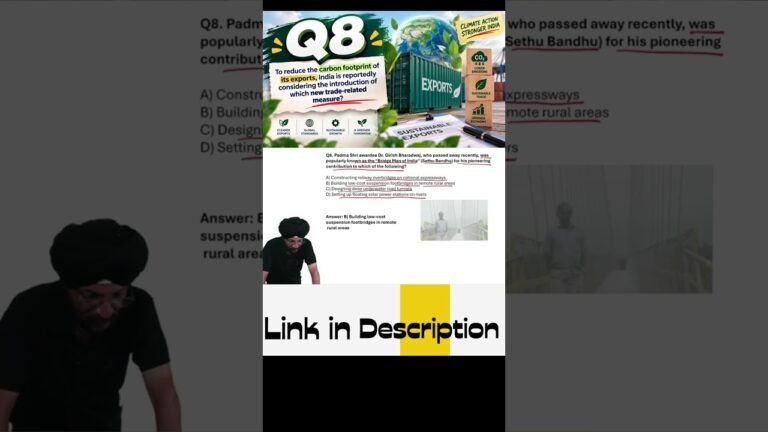
Which New Trade-Related Measure Is India Considering to Reduce the Carbon Footprint of Its Exports?
India is strengthening its efforts to help exporters meet evolving
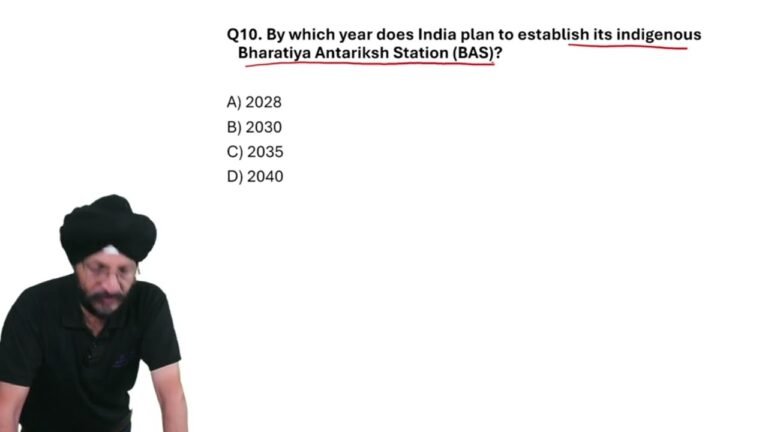
Bharatiya Antariksh Station (BAS) by 2035 | India’s Space Station | Current Affairs 2026
Bharatiya Antariksh Station | Current Affairs 2026
Q10. By which
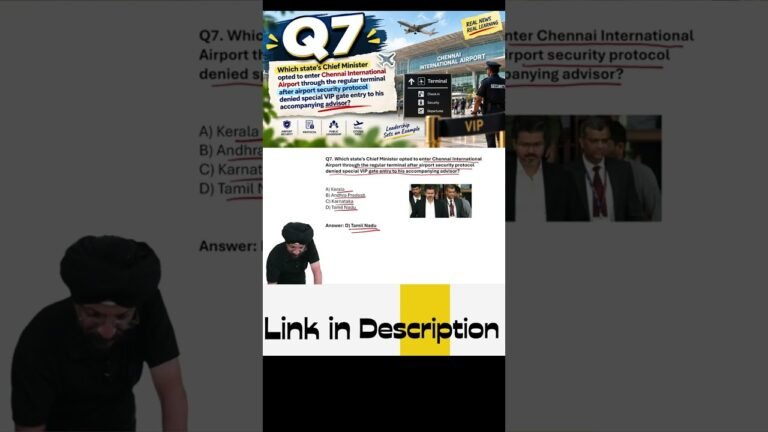
Which Chief Minister Chose the Regular Terminal at Chennai Airport Instead of VIP Entry?
Tamil Nadu Chief Minister C. Joseph Vijay chose to enter