Salesforce Certifications in 2026: Complete Guide to Choosing the Right Certification for Your Career
Salesforce has become one of the leading CRM platforms used by organizations across industries to manage customer relationships, sales operations, service processes, marketing activities, and business workflows. As the Salesforce ecosystem continues to expand, professionals with relevant platform knowledge and validated skills can explore a wide range of career opportunities.
One of the most recognized ways to demonstrate Salesforce expertise is through **Salesforce certifications**.
A Salesforce certification can help learners validate their knowledge, strengthen their professional profile, and create a structured learning goal. However, certification alone does not guarantee a job. The strongest candidates combine certification with practical experience, hands-on projects, problem-solving ability, and interview preparation.
For students and professionals planning a Salesforce career, understanding which certification to pursue and how to prepare for it is extremely important.
**Prabh Kirpa Classes** helps learners understand Salesforce technologies through structured training, practical concepts, and career-focused learning resources.
## What Is a Salesforce Certification?
A Salesforce certification is a professional credential that validates knowledge and skills related to Salesforce products, technologies, or roles.
Salesforce offers certifications across different areas of its ecosystem. Some focus on administration and platform fundamentals, while others are designed for developers, architects, consultants, and specialists.
Each certification has its own exam structure, prerequisites where applicable, recommended experience, and subject areas.
Instead of trying to complete every certification, professionals should select certifications that match their career goals.
For example, someone interested in Salesforce Administration may follow an Administrator-focused path, while a developer may eventually explore Platform Developer credentials and specialized development technologies.
## Why Are Salesforce Certifications Important?
Certification can provide several benefits to Salesforce professionals.
### 1. Validates Your Knowledge
A certification demonstrates that you have studied a defined set of Salesforce concepts and successfully passed an assessment.
It can provide employers with an additional indicator of your platform knowledge.
### 2. Creates a Structured Learning Goal
Preparing for a certification gives learners a clear syllabus and target.
Instead of learning random Salesforce topics, you can organize your preparation around specific exam objectives.
### 3. Strengthens Your Professional Profile
A relevant certification can make your resume more informative and help recruiters understand your Salesforce specialization.
It can also be useful when updating professional profiles and discussing your qualifications during interviews.
### 4. Supports Career Progression
Professionals can use certifications as milestones while developing their Salesforce careers.
For example, a learner might begin with foundational Salesforce knowledge and later progress toward development, consulting, or specialized credentials.
### 5. Encourages Continuous Learning
Salesforce evolves continuously. New features, platform capabilities, and technologies are introduced over time.
Certification preparation can encourage professionals to regularly update their knowledge.
## Salesforce Certification Path for Beginners
One of the biggest questions beginners have is:
**”Which Salesforce certification should I start with?”**
For many beginners, the Salesforce Administrator certification is a logical starting point because it helps establish knowledge of core Salesforce functionality.
Before choosing a certification, consider:
* Your current experience
* Whether you prefer functional or technical work
* Your programming background
* Your desired Salesforce job role
* Your long-term career goals
A clear career objective makes certification selection much easier.
## Salesforce Administrator Certification
The Salesforce Administrator certification is commonly associated with professionals who configure, manage, and support Salesforce environments.
Important areas to understand include:
* Salesforce fundamentals
* Organization setup
* User management
* Security and access
* Data management
* Objects and fields
* Relationships
* Reports and dashboards
* Workflow and automation concepts
* App customization
* Sales and service functionality
The certification can be particularly relevant for learners interested in Salesforce Administration.
However, preparation should not be limited to memorizing multiple-choice answers.
A candidate should understand how Salesforce features work and why a particular configuration would be appropriate in a business scenario.
## Salesforce Platform Developer Certification
Professionals interested in coding and Salesforce application development can explore developer certifications.
Development preparation may involve topics such as:
* Apex
* SOQL
* SOSL
* Data modeling
* Triggers
* Classes
* Exception handling
* Testing
* Governor limits
* Security
* Lightning development
A developer should understand both Salesforce platform fundamentals and programming concepts.
Practical coding experience can significantly improve preparation because many Salesforce development concepts become easier to understand when implemented in real scenarios.
## Salesforce Advanced Administrator
After gaining experience with core Salesforce Administration, professionals can explore more advanced administration concepts.
Advanced learning may involve:
* Complex configuration
* Advanced security
* Data management
* Automation
* Reporting
* Advanced Salesforce functionality
* Business process optimization
This type of certification path can be useful for administrators who want to deepen their platform expertise.
## Salesforce Consultant Certifications
Salesforce also provides certification paths for professionals interested in consulting and implementation roles.
Consultants need more than technical knowledge.
They must understand how to analyze business requirements and translate them into Salesforce solutions.
Consultant-focused preparation may involve:
* Requirement gathering
* Business processes
* Solution design
* Salesforce configuration
* Data management
* Security
* Implementation strategies
* User adoption
* Testing
* Deployment
Professionals with strong communication and analytical skills may find consulting an attractive career direction.
## Salesforce Architect Career Path
Architecture is one of the more advanced areas of the Salesforce ecosystem.
Salesforce Architects work with complex technology environments and help organizations design scalable solutions.
Architecture requires a broad understanding of areas such as:
* Data architecture
* Integration architecture
* Security
* Application design
* Development
* Scalability
* Performance
* Governance
Professionals should generally build substantial Salesforce experience before attempting advanced architecture credentials.
Architecture is not simply about passing an exam. It requires the ability to understand complex business and technical requirements and design appropriate solutions.
## Salesforce Certification for Developers
Developers can build their certification journey progressively.
A typical learning path may involve:
**Salesforce Fundamentals → Administration Knowledge → Apex & SOQL → Development → Lightning Web Components → Advanced Development**
The exact certification path should depend on current Salesforce certification offerings and the professional’s career objective.
The important point is to avoid jumping into advanced certifications without understanding the platform fundamentals.
## Salesforce Marketing and Service Specializations
Salesforce has a large ecosystem beyond Sales Cloud and Administration.
Professionals can explore specialized areas related to:
* Marketing
* Customer Service
* Data
* Commerce
* Experience Cloud
* Industry solutions
* Automation
* Analytics
* Integration
Specialization can be valuable when it aligns with your professional experience and the type of Salesforce projects you want to work on.
## How to Choose the Right Salesforce Certification
Choosing a certification should be a career decision rather than a random selection.
Ask yourself these questions.
### Do You Like Configuration?
If you enjoy configuring applications, managing users, working with reports, and designing automation, an Administration-oriented path may suit you.
### Do You Like Programming?
If you enjoy coding and solving technical problems, consider a development-focused path.
### Do You Like Business Analysis?
If you enjoy understanding business requirements and designing solutions, consulting may be suitable.
### Do You Have Strong Technical Experience?
Professionals with development, database, cloud, or integration experience may be able to progress toward specialized technical certifications.
### Are You a Complete Beginner?
Start with foundational concepts rather than immediately choosing an advanced credential.
## Salesforce Certification Preparation Strategy
Passing a certification exam requires structured preparation.
### Step 1: Understand the Exam Objectives
Start by reviewing the official exam information and understanding the topics covered.
Create a study plan around those objectives.
### Step 2: Build Conceptual Knowledge
Learn the fundamentals before attempting practice questions.
For example, if studying security, understand how profiles, permission sets, roles, sharing settings, and field-level security work.
### Step 3: Practice Hands-On
Hands-on experience is one of the most important parts of Salesforce learning.
Create your own Salesforce scenarios.
Practice configuring:
* Objects
* Fields
* Relationships
* Users
* Permissions
* Validation Rules
* Flows
* Reports
* Dashboards
For development-focused certifications, practice Apex, SOQL, triggers, classes, and Lightning development.
### Step 4: Solve Scenario-Based Questions
Salesforce exams often require candidates to select the most appropriate solution for a business requirement.
Therefore, simply memorizing definitions is not enough.
Practice questions should be followed by an explanation of why an answer is correct and why other options are less appropriate.
### Step 5: Review Weak Areas
Track topics where you consistently make mistakes.
Instead of repeatedly taking random mock tests, return to the underlying concept and understand it properly.
### Step 6: Take Practice Exams
Practice exams can help you evaluate your preparation and become comfortable with the question format.
However, practice questions should supplement learning rather than replace it.
## Common Salesforce Certification Mistakes
### Mistake 1: Memorizing Dumps
Relying entirely on memorized exam questions is a weak preparation strategy.
Salesforce certification preparation should focus on understanding concepts and applying them to scenarios.
### Mistake 2: Ignoring Hands-On Practice
A person may pass an exam but struggle to configure Salesforce in a real project.
Hands-on practice helps close this gap.
### Mistake 3: Choosing an Advanced Certification Too Early
Advanced certifications require deeper knowledge and, in many cases, practical experience.
Build a strong foundation first.
### Mistake 4: Studying Without a Plan
Jumping between unrelated topics can make preparation inefficient.
Follow a structured syllabus and track progress.
### Mistake 5: Ignoring Salesforce Updates
Salesforce changes over time.
Always prepare using current official exam information and updated learning resources.
## Certification vs Practical Experience
A common misconception is that certification automatically makes someone job-ready.
Certification and practical experience serve different purposes.
Certification validates knowledge against an examination standard.
Practical experience demonstrates that you can apply that knowledge to real business requirements.
For example, an Administrator should not only know what a Flow is. They should be able to design an appropriate Flow for a business process.
Similarly, a Developer should not only understand Apex syntax. They should be able to write maintainable code, understand governor limits, implement appropriate security, and test their solution.
The strongest Salesforce professionals combine both.
## How to Build a Salesforce Certification + Career Roadmap
A learner can create a progressive roadmap.
### Stage 1: Salesforce Fundamentals
Understand:
* CRM concepts
* Salesforce architecture
* Objects
* Fields
* Relationships
* Data
* Security
* Reports
* Dashboards
### Stage 2: Administration
Learn:
* User management
* Permissions
* Sharing
* Data management
* Automation
* Configuration
* Business processes
### Stage 3: Certification Preparation
Choose a certification aligned with your target role.
Create a study schedule and practice regularly.
### Stage 4: Practical Projects
Build realistic projects to apply your knowledge.
For example, create a complete CRM system for a fictional organization with:
* Lead management
* Account management
* Contact management
* Opportunity tracking
* Automated notifications
* Reports
* Dashboards
* Security controls
### Stage 5: Advanced Specialization
After building a strong foundation, explore:
* Apex
* LWC
* Integration
* OmniStudio
* Marketing Cloud
* Service Cloud
* Sales Cloud
* Data technologies
* Consulting
* Architecture
## How Prabh Kirpa Classes Supports Salesforce Learning
Prabh Kirpa Classes provides Salesforce learning resources designed to help students and professionals understand Salesforce technologies in a structured way.
The learning approach focuses on building knowledge step by step rather than simply memorizing exam questions.
Learners can explore topics related to:
* Salesforce Administration
* Salesforce Development
* Apex
* SOQL
* Lightning Web Components
* Integration
* OmniStudio
* Sales Cloud
* Service Cloud
* Salesforce interview preparation
The objective is to help learners develop both conceptual understanding and practical knowledge.
## Tips for Working Professionals
Working professionals often have limited time for certification preparation.
Instead of studying for several hours only on weekends, create a consistent schedule.
For example:
**Weekdays:** 60–90 minutes of focused study
**Weekends:** Hands-on practice and mock tests
Use small study sessions to cover individual topics.
Consistency is more important than trying to complete the entire syllabus in a few days.
## Tips for Freshers
Freshers should focus on fundamentals before chasing multiple certifications.
Start by understanding Salesforce Administration and basic CRM concepts.
Then build practical projects and develop interview skills.
Once the foundation is strong, select certifications that align with your desired role.
A fresher with certification, practical projects, Salesforce knowledge, and strong communication skills can present a much stronger professional profile than someone who only lists a certificate.
## Frequently Asked Questions
### Is Salesforce certification worth it?
A relevant Salesforce certification can be valuable for demonstrating knowledge and creating a structured career-development path. Its value is strongest when combined with practical skills and experience.
### Which Salesforce certification is best for beginners?
For many beginners, Salesforce Administrator is a logical starting point because it introduces core Salesforce platform concepts.
### Can a non-programmer learn Salesforce?
Yes. Salesforce Administration can be learned without becoming an advanced programmer. Programming becomes more important for development-oriented roles.
### Can I get a Salesforce job with certification alone?
Certification can strengthen your profile, but employers may also evaluate practical knowledge, experience, projects, communication, and problem-solving ability.
### How should I prepare for a Salesforce certification?
Use current official exam information, structured learning resources, hands-on practice, scenario-based questions, and practice exams.
### Should I take multiple Salesforce certifications?
There is no need to collect certifications randomly. Choose credentials that support your career direction and build them progressively.
## Final Thoughts
Salesforce certification can be an important milestone in a professional’s Salesforce journey, but it should be treated as part of a larger career-development strategy.
Start with a clear goal. Choose the certification that matches your target role. Learn the concepts thoroughly, practice on the platform, work on projects, and prepare for scenario-based questions.
Whether you want to become a Salesforce Administrator, Developer, Consultant, Integration Specialist, or eventually move toward architecture, a structured learning path can help you progress with greater confidence.
At **Prabh Kirpa Classes**, the focus is on helping learners understand Salesforce concepts, explore different technologies, and develop skills that can be applied beyond the certification exam.
**Learn the platform. Practice the skills. Earn the certification. Build your Salesforce career.**
Newsletter
Recent Posts
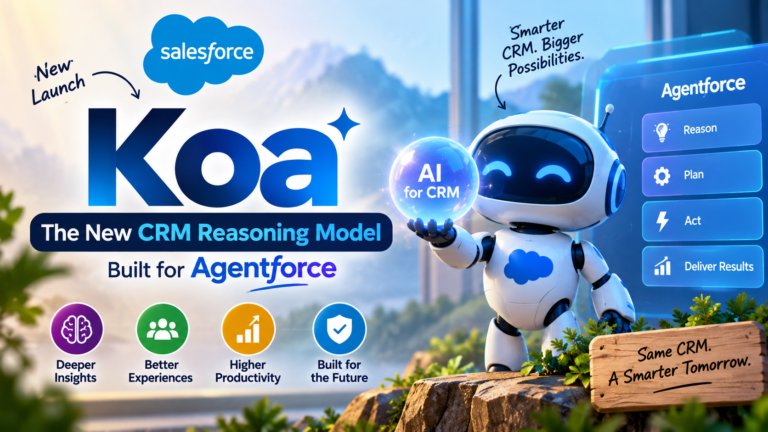
Salesforce Koa: The New CRM Reasoning Model Built for Agentforce
Artificial intelligence is rapidly changing how businesses use CRM platforms.

Trump Warns EU Over Canada’s Proposed Associate Membership 🇺🇸🇨🇦🇪🇺 | Current Affairs 2026
U.S. President Donald Trump warned the European Union of potential
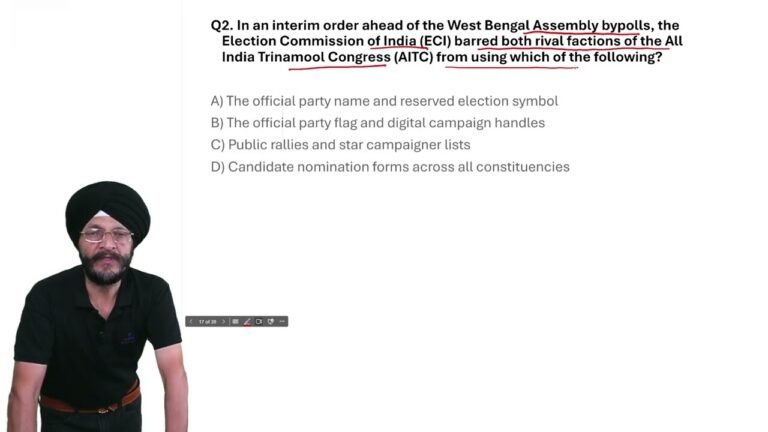
West Bengal Bypolls 2026: ECI Bans TMC Name & Symbol | Current Affairs MCQ
In today’s Current Affairs 2026 MCQ, we cover an important

Trump Warns EU Over Canada’s Associate Membership | Current Affairs MCQ 2026
In today’s Current Affairs 2026, we cover an important international