Salesforce Placement Support for Freshers: From Training to Interview Preparation
Introduction
Starting a career after graduation can be challenging. Many freshers have the required educational qualifications but are unsure about which technology to learn, how to prepare for interviews, or how to present their skills to recruiters.
Salesforce has become an attractive career option for learners interested in cloud technology, CRM, automation, and business applications. However, learning Salesforce is only the beginning. To become genuinely job-ready, candidates need practical knowledge, project experience, interview preparation, and guidance throughout their career journey.
This is where Salesforce placement support can be useful.
A structured placement-focused program can help learners move from classroom learning to practical application and then toward interview preparation and relevant job opportunities.
At Prabh Kirpa Classes, the focus is on helping learners develop Salesforce skills while also preparing them for the recruitment process.
What Is Salesforce Placement Support?
Salesforce placement support is career assistance provided to learners after or alongside their technical training.
It can include:
Career guidance
Resume preparation
Project guidance
Mock interviews
Technical interview preparation
HR interview preparation
Job opportunity assistance
Interview feedback
Skill-gap identification
The purpose is to help candidates become better prepared for the Salesforce hiring process.
Why Freshers Need Placement Preparation
Freshers often face several challenges when applying for their first job.
They may know Salesforce concepts but struggle to:
Explain their projects
Answer scenario-based questions
Create an effective resume
Understand job descriptions
Communicate confidently
Handle technical interviews
Placement preparation helps address these areas before candidates enter the recruitment process.
Step 1: Build a Strong Salesforce Foundation
Before focusing on placement, candidates should understand the core Salesforce platform.
Important areas include:
CRM Fundamentals
Salesforce Navigation
Objects and Fields
Relationships
Page Layouts
Record Types
Data Management
Security
Reports and Dashboards
A strong foundation makes advanced learning easier.
Step 2: Learn Salesforce Administration
Administration is a popular starting point for Salesforce beginners.
Students should understand:
User Management
Creating users and managing access.
Security
Understanding Profiles, Permission Sets, Roles, and Sharing Rules.
Data Management
Importing, updating, and maintaining Salesforce records.
Reporting
Creating reports and dashboards for business users.
Automation
Using Flow Builder to automate repetitive processes.
Practical configuration is especially important for placement preparation.
Step 3: Develop Automation Skills
Salesforce Flow is an important skill for modern Salesforce professionals.
Practice scenarios such as:
Automatically updating records
Sending notifications
Creating related records
Collecting information through Screen Flows
Automating approval-related processes
Understanding when and why to use automation is more important than memorizing definitions.
Step 4: Work on Practical Projects
Projects give freshers something concrete to discuss during interviews.
Some useful project ideas include:
Sales CRM
Manage leads, accounts, contacts, and opportunities.
Customer Service Application
Track customer cases and service requests.
Employee Management System
Manage employee records, departments, leave, and approvals.
Student Management System
Manage student details, courses, attendance, and academic information.
Projects help demonstrate practical knowledge and problem-solving ability.
Step 5: Learn How to Explain Your Project
Recruiters frequently ask:
“Explain your Salesforce project.”
Don’t answer by simply describing the project title.
Explain:
The business requirement
The problem you wanted to solve
Your Salesforce solution
Features you configured
Automation you created
Your individual contribution
Challenges you encountered
What you learned
This structure helps you provide a clear and professional answer.
Step 6: Prepare Your Resume
A Salesforce resume should be easy for recruiters to understand.
Include:
Professional Summary
Salesforce Skills
Projects
Certifications
Education
Relevant Experience
Freshers can highlight practical projects, assignments, certifications, and technical skills.
Avoid adding a technology simply because it appears in a course syllabus. Only include skills that you can confidently discuss.
Step 7: Prepare for Technical Interviews
Technical interview preparation should cover both concepts and practical scenarios.
For Administrator roles, revise:
Objects
Relationships
Security
Profiles
Permission Sets
Reports
Dashboards
Data Management
Validation Rules
Flow Builder
For Developer roles, additionally prepare:
Apex
SOQL
Triggers
Test Classes
Lightning Web Components
Integration Basics
Step 8: Practice Scenario-Based Questions
Salesforce interviews are not always based on definitions.
You may be given a business situation and asked to suggest a solution.
For example:
“A company wants to automatically assign new records to a specific team based on certain conditions. How would you approach the requirement?”
The interviewer wants to understand your problem-solving process.
Practice identifying:
Requirement → Possible Solution → Configuration → Testing
Step 9: Prepare for HR Interviews
Technical preparation should be combined with HR preparation.
Common questions include:
Tell me about yourself.
Why did you choose Salesforce?
Why should we hire you?
What are your strengths?
What are your career goals?
Tell me about your project.
How do you handle challenges?
Prepare your key points, but avoid memorizing complete answers.
Step 10: Improve Communication Skills
A Salesforce professional may need to communicate with developers, managers, clients, and business users.
You should be able to:
Explain technical concepts simply
Ask questions
Discuss requirements
Present solutions
Participate in meetings
Explain your project confidently
Strong communication can help you present your technical knowledge more effectively.
Step 11: Certification Preparation
A Salesforce certification can strengthen a fresher’s profile.
Beginners may consider starting with the Salesforce Administrator certification and then exploring certifications relevant to their career path.
However, certification should be combined with practical skills.
A certificate demonstrates learning, while projects demonstrate application.
Step 12: Mock Interview Practice
Mock interviews help candidates experience the pressure of an actual interview before meeting a recruiter.
They can help improve:
Technical answers
Communication
Confidence
Body language
Project explanation
Interview etiquette
Feedback after each mock interview can help candidates identify areas for improvement.
What Makes a Candidate Job-Ready?
A job-ready Salesforce candidate should ideally have a combination of:
Technical Skills + Practical Projects + Communication + Resume + Interview Preparation
No single element is enough by itself.
For example, a candidate may have a certification but no practical experience. Another may have good technical knowledge but struggle to explain projects. A complete preparation approach addresses these gaps.
Common Placement Mistakes Freshers Should Avoid
1. Learning Only Theory
Salesforce is a practical platform. Use a practice environment to apply what you learn.
2. Ignoring Projects
Projects provide useful examples during interviews.
3. Adding Unfamiliar Skills to Your Resume
Recruiters may ask questions about every skill listed.
4. Memorizing Interview Answers
Understand concepts instead of memorizing scripts.
5. Ignoring Communication
Technical knowledge needs to be explained clearly.
6. Applying Randomly
Target roles that match your current skills and experience.
How Prabh Kirpa Classes Supports Salesforce Placement Preparation
Prabh Kirpa Classes provides Salesforce training along with career-oriented support designed to help learners prepare for the recruitment process.
Training and support can include:
Salesforce Administration
Salesforce Development
Lightning Web Components
Salesforce Integration
OmniStudio
Practical Assignments
Live Projects
Certification Guidance
Resume Building
Mock Interviews
Career Guidance
Job Support
The objective is to help learners build relevant skills and become better prepared for Salesforce opportunities.
Placement support is designed to assist candidates with preparation and relevant opportunities; final hiring decisions are made by employers and depend on individual candidate performance.
Frequently Asked Questions
Is Salesforce placement support useful for freshers?
Yes. Freshers can benefit from project guidance, resume preparation, mock interviews, communication practice, and career guidance.
Can I get a Salesforce job after training?
Training can help you develop relevant skills, but employment depends on your abilities, interview performance, experience, and employer requirements.
Do I need coding knowledge for Salesforce?
Not for every role. Salesforce Administration can be a starting point for learners without extensive programming experience. Developer roles require programming knowledge.
Are Salesforce projects important for placements?
Yes. Projects allow candidates to demonstrate how they apply Salesforce features to practical business requirements.
Does placement support guarantee a job?
No. Placement support cannot guarantee selection. It is intended to improve preparation and assist candidates during their job search.
Conclusion
Getting your first Salesforce job requires more than completing a training course. Freshers need a combination of technical knowledge, practical experience, project understanding, communication skills, resume preparation, and interview confidence.
A structured Salesforce placement support program can help bring these areas together and make the transition from learning to job searching more organized.
At Prabh Kirpa Classes, learners can receive Salesforce training, practical project experience, certification guidance, resume support, mock interview preparation, and job-support assistance. The aim is to help students and aspiring professionals build the skills and confidence required to approach Salesforce career opportunities professionally.
Start with the right foundation, practice consistently, build meaningful projects, and prepare seriously for every stage of the recruitment process.
Newsletter
Recent Posts
Russian Bank Hit by Fresh U.S. Sanctions 🚨 | Which Bank? | Current Affairs
Question: Which Russian bank has been hit with fresh U.S.
India Approves Power Export to Flood-Hit Nepal ⚡ | How Much Power? | Current Affairs 2026
Question: What is the maximum power capacity India has approved
Supreme Court Orders Timeline for Food Warning Labels | FSSAI | Current Affairs 2026
Who is the statutory authority responsible for regulating food safety
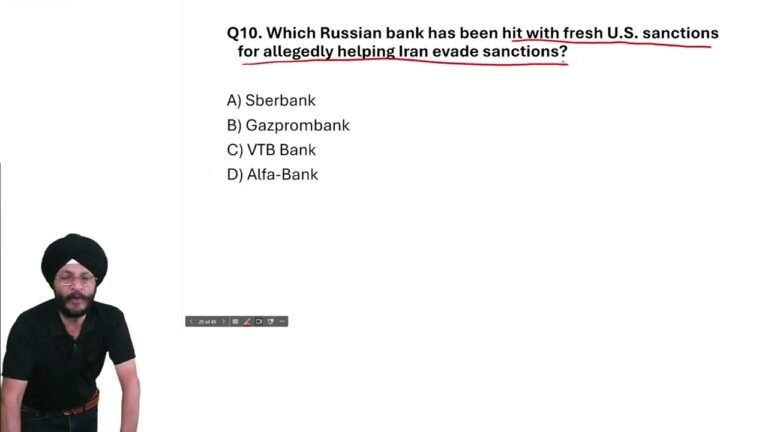
Russian Bank Hit by Fresh U.S. Sanctions 🚨 | Which Bank? | Current Affairs 2026
Daily Current Affairs | September 2026
In this video, test