Salesforce Training in 2026: Complete Career Roadmap for Beginners and Professionals
Salesforce has become one of the most widely used customer relationship management (CRM) platforms in the world. From managing customer relationships and sales pipelines to automating business processes and building customized applications, Salesforce helps organizations improve productivity and deliver better customer experiences.
For professionals looking to build a career in cloud technology, Salesforce offers opportunities across administration, development, automation, consulting, integration, and specialized cloud platforms. The best part is that you do not necessarily need to start with advanced programming knowledge. With the right learning path, beginners can gradually build their Salesforce skills and move toward professional roles.
Prabh Kirpa Classes focuses on practical Salesforce learning designed to help students, freshers, working professionals, and career switchers understand Salesforce concepts and develop job-ready skills.
What Is Salesforce?
Salesforce is a cloud-based CRM platform that enables organizations to manage customer information, sales activities, service operations, marketing processes, and business workflows from a centralized platform.
Instead of maintaining customer information across multiple disconnected systems, companies can use Salesforce to organize data, automate repetitive processes, monitor performance, and create customized solutions according to their business requirements.
Salesforce is also highly customizable. Organizations can configure many features without extensive coding, while developers can use technologies such as Apex and Lightning Web Components to create advanced applications.
This combination of configuration, automation, development, and integration makes Salesforce a valuable career ecosystem for people with different technical backgrounds.
Why Choose Salesforce as a Career?
The technology industry changes quickly, but businesses continue to need professionals who can manage customer data, automate workflows, build applications, and connect different business systems.
Salesforce careers cover multiple skill levels and professional backgrounds.
A beginner can start with Salesforce Administration and gradually move into development or specialized technologies. Someone with programming experience can explore Apex, Lightning Web Components, APIs, and integrations. Professionals with business or consulting backgrounds can explore Salesforce consulting, business analysis, and solution design.
This flexibility makes Salesforce different from a career path that depends on only one technical skill.
Another important advantage is the Salesforce ecosystem. Learning Salesforce can open opportunities in organizations that use CRM technology across sales, customer service, marketing, operations, and other business functions.
Salesforce Career Options
Salesforce provides several career paths.
1. Salesforce Administrator
A Salesforce Administrator manages the Salesforce platform and helps organizations maintain an efficient CRM environment.
Typical responsibilities include:
- Managing users and permissions
- Creating and maintaining objects and fields
- Managing reports and dashboards
- Configuring automation
- Maintaining data quality
- Creating validation rules
- Supporting business users
- Managing Salesforce security settings
Administration is often a strong starting point for beginners.
2. Salesforce Developer
Salesforce Developers work on customized solutions that require programming and advanced technical knowledge.
They commonly work with:
- Apex
- SOQL
- SOSL
- Lightning Web Components
- Triggers
- Classes
- APIs
- Integrations
- Custom applications
Developers need a stronger understanding of programming concepts and Salesforce architecture.
3. Salesforce Lightning Web Components Developer
Lightning Web Components, commonly called LWC, is Salesforce’s modern framework for creating user interfaces.
LWC development involves technologies such as:
- HTML
- CSS
- JavaScript
- Salesforce APIs
- Apex
- Lightning Data Service
Professionals interested in modern web development can build valuable skills by learning LWC.
4. Salesforce Integration Specialist
Modern businesses rarely use one software platform in isolation. Salesforce often needs to communicate with external applications such as ERP systems, payment platforms, marketing tools, data systems, and other business applications.
Integration professionals work with concepts such as:
- REST APIs
- SOAP APIs
- JSON
- XML
- Authentication
- Middleware
- Web services
- Data synchronization
Integration is an important specialization for experienced Salesforce professionals.
5. Salesforce Consultant
Salesforce Consultants work closely with businesses to understand their requirements and translate them into Salesforce solutions.
A consultant may be involved in:
- Requirement gathering
- Process analysis
- Solution design
- Salesforce configuration
- User training
- Implementation
- Testing
- Deployment
This career path is particularly suitable for professionals who enjoy combining technology with business problem-solving.
Salesforce Admin vs Salesforce Developer
One of the most common questions among beginners is whether they should learn Administration or Development first.
The answer depends on your background and career goal.
If you are completely new to Salesforce, Administration can provide a strong foundation. You can learn how Salesforce works, understand its data model, configure applications, manage users, and create automation.
If you already have programming experience, you may eventually want to move toward development.
A strong Salesforce professional should understand both the platform’s functional side and its technical possibilities.
For this reason, many learners choose a structured path that begins with Administration and later progresses toward Development.
Important Salesforce Concepts Beginners Should Learn
Before moving into advanced topics, students should develop a strong understanding of Salesforce fundamentals.
Objects and Fields
Objects store information in Salesforce, while fields represent individual pieces of information.
For example, an Account can contain fields such as Account Name, Industry, Website, and Phone.
Understanding the Salesforce data model is essential because almost every Salesforce implementation depends on how data is structured.
Relationships
Salesforce supports relationships between records and objects.
Common relationship concepts include:
- Lookup Relationship
- Master-Detail Relationship
- Many-to-Many Relationships
- Junction Objects
Understanding relationships helps professionals design effective Salesforce data models.
Security
Salesforce provides multiple layers of security.
Learners should understand concepts such as:
- Profiles
- Permission Sets
- Roles
- Organization-Wide Defaults
- Sharing Rules
- Field-Level Security
- Object Permissions
Security is one of the most important areas for Salesforce Administrators and Developers.
Reports and Dashboards
Businesses need meaningful information from their CRM data.
Salesforce Reports help users analyze data, while Dashboards provide visual representations of important metrics.
A Salesforce professional should know how to create useful reports, apply filters, summarize information, and build dashboards according to business requirements.
Salesforce Automation
Automation is one of the most important Salesforce skills.
Businesses use automation to reduce manual work and improve consistency.
Salesforce professionals should understand automation concepts such as:
- Flows
- Record-Triggered Flows
- Screen Flows
- Scheduled Flows
- Approval Processes
- Validation Rules
- Assignment Rules
Among these technologies, Salesforce Flow has become particularly important for modern Salesforce implementations.
A learner should understand not only how to create a Flow but also when automation should be used and how to design it efficiently.
Salesforce Development
After developing strong platform fundamentals, learners interested in development can move toward programming.
Apex
Apex is Salesforce’s programming language.
Developers use Apex to implement business logic that cannot be achieved through standard configuration alone.
Important Apex concepts include:
- Variables
- Collections
- Lists
- Sets
- Maps
- Classes
- Methods
- Exception handling
- Triggers
- Asynchronous Apex
- Governor limits
Apex knowledge becomes especially important when building complex Salesforce solutions.
SOQL
Salesforce Object Query Language, or SOQL, is used to retrieve Salesforce records.
For example, developers may use SOQL to retrieve Accounts, Contacts, Opportunities, or custom object records based on specific conditions.
Understanding SOQL is essential for Salesforce Developers because efficient data retrieval is a fundamental part of application development.
Lightning Web Components
LWC allows developers to create modern, reusable user interfaces.
Learning JavaScript along with Salesforce concepts can help developers build interactive components and customized Salesforce experiences.
Salesforce Integration
As organizations adopt multiple digital platforms, integration skills become increasingly valuable.
A Salesforce professional may need to connect Salesforce with another application through an API.
For example, a company might want customer information from Salesforce to communicate with an external ERP system.
Important integration topics include:
- REST API
- SOAP API
- HTTP methods
- Authentication
- JSON
- XML
- External Services
- Named Credentials
- Middleware
- Error handling
Understanding integrations can help professionals move into more advanced technical roles.
Salesforce OmniStudio
Salesforce OmniStudio is another area that professionals can explore, particularly when working with industry-specific Salesforce solutions.
OmniStudio provides tools for creating guided user experiences, data interactions, and reusable components.
Learners interested in advanced Salesforce technologies can explore concepts such as:
- OmniScripts
- DataRaptors
- Integration Procedures
- FlexCards
Specialized Salesforce skills can complement core Administration and Development knowledge.
How to Start Learning Salesforce
A structured learning path is generally more effective than trying to learn everything simultaneously.
Step 1: Understand CRM Fundamentals
Start by understanding what CRM systems do and why organizations use Salesforce.
Learn basic business processes such as sales, customer service, lead management, and opportunity management.
Step 2: Learn Salesforce Administration
Build a foundation in:
- Objects
- Fields
- Relationships
- Security
- Users
- Reports
- Dashboards
- Data management
- Automation
Step 3: Practice on Salesforce
Theory alone is not enough.
Students should practice creating objects, fields, flows, reports, dashboards, validation rules, and security configurations.
Hands-on practice helps learners understand how different Salesforce features work together.
Step 4: Move Toward Development
Once the fundamentals are strong, learners interested in technical roles can begin studying:
- Apex
- SOQL
- Triggers
- Classes
- LWC
- APIs
- Integrations
Step 5: Work on Projects
Projects help convert theoretical knowledge into practical experience.
A learner could create a sample CRM solution for a fictional company, including customer management, lead tracking, opportunity management, automation, reporting, and customized user interfaces.
Step 6: Prepare for Interviews
Salesforce interviews can include both conceptual and practical questions.
Candidates should be prepared to explain not only definitions but also why and when a particular Salesforce feature should be used.
Interview preparation should cover:
- Salesforce fundamentals
- Security
- Data modeling
- Automation
- Apex
- SOQL
- LWC
- Integration
- Scenario-based questions
Why Practical Training Matters
One of the biggest challenges for Salesforce learners is the difference between understanding a concept and implementing it.
For example, a student may know what a Flow is but still struggle to design a Flow for a real business requirement.
Practical training bridges this gap.
At Prabh Kirpa Classes, the focus is on helping learners understand Salesforce concepts through structured learning and practical examples. The objective is to build a strong foundation that learners can apply to real-world scenarios and professional environments.
Who Can Learn Salesforce?
Salesforce is not limited to computer science graduates.
The platform can be explored by:
- Fresh graduates
- IT professionals
- Working professionals
- Career switchers
- Software developers
- Testers
- Business analysts
- CRM professionals
- Students interested in cloud technology
The learning path may differ depending on your previous experience.
A non-programmer may begin with Administration, while someone with a programming background may move faster into Development and LWC.
Salesforce Certifications
Salesforce certifications can help professionals demonstrate their knowledge of specific Salesforce technologies.
Depending on career goals, learners can explore certifications related to Administration, Development, Platform technologies, and specialized Salesforce products.
However, certification should not replace practical knowledge.
A strong candidate should ideally combine certification preparation with hands-on practice, project experience, troubleshooting skills, and interview preparation.
Common Mistakes Salesforce Beginners Should Avoid
Trying to Learn Everything at Once
Salesforce is a large ecosystem. Trying to learn every cloud, tool, and development technology simultaneously can create confusion.
Start with a clear learning path.
Focusing Only on Theory
Watching videos and reading documentation is useful, but practical implementation is essential.
Create Salesforce configurations and solve business scenarios regularly.
Ignoring Security
Security is a core Salesforce concept. Do not treat profiles, permission sets, roles, sharing, and field-level security as optional topics.
Memorizing Interview Answers
Understanding concepts is more valuable than memorizing definitions.
Interviewers often ask scenario-based questions to test practical understanding.
Skipping Projects
Projects provide an opportunity to combine multiple Salesforce concepts into one working solution.
How Prabh Kirpa Classes Can Help
Learning Salesforce becomes easier when the content is organized into a structured roadmap.
Prabh Kirpa Classes provides Salesforce learning resources covering areas such as Administration, Development, LWC, Integration, and other Salesforce technologies.
The goal is to help learners move from fundamentals toward practical and advanced Salesforce concepts.
A structured learning approach can help students:
- Build Salesforce fundamentals
- Understand real-world scenarios
- Develop technical skills
- Practice important concepts
- Prepare for interviews
- Explore different Salesforce career paths
- Progress from beginner to advanced topics
The most important part of any Salesforce learning journey is consistency. Regular practice, problem-solving, and continuous learning can make a significant difference.
Final Thoughts
Salesforce offers a broad career ecosystem for people interested in CRM, cloud technology, business processes, development, automation, and consulting.
The right starting point depends on your background and career objective. Beginners can start with Salesforce Administration and gradually progress toward Development, LWC, Integration, OmniStudio, or other specialized areas.
Professionals with existing technical experience can build on their programming and cloud knowledge by learning Salesforce-specific technologies.
However, successful Salesforce learning is not simply about completing a course or memorizing concepts. It is about understanding how the platform works, solving business problems, building practical solutions, and continuously improving your skills.
If you are planning to start or advance your Salesforce career, Prabh Kirpa Classes can be a useful learning resource for building structured knowledge and exploring the Salesforce ecosystem.
Start with the fundamentals. Practice consistently. Build real skills. Grow your Salesforce career.
Frequently Asked Questions
Is Salesforce good for beginners?
Yes. Salesforce Administration provides an accessible starting point for learners who are new to the platform. Beginners can gradually move into advanced areas after building a strong foundation.
Do I need coding knowledge to learn Salesforce?
Not necessarily. Many Salesforce Administration tasks can be performed using configuration tools. Coding becomes more important when moving into areas such as Apex and Lightning Web Components.
How long does it take to learn Salesforce?
The timeline depends on your previous experience, learning schedule, and career goal. Consistent practice and a structured roadmap can make the learning process more effective.
Should I learn Salesforce Admin or Developer first?
For complete beginners, Administration is often a logical starting point because it introduces the platform’s core concepts. Learners with programming experience may eventually progress into Development.
Is Salesforce still a good career option?
Salesforce continues to be an important enterprise CRM platform, creating opportunities across administration, development, consulting, automation, and integration. Professionals should continue updating their skills as the Salesforce ecosystem evolves.
What should I practice while learning Salesforce?
Practice data modeling, security, automation, reports, dashboards, Apex, SOQL, LWC, and integrations according to your chosen career path. Building projects around realistic business scenarios can make practice more effective.
Where can I learn Salesforce?
You can explore structured Salesforce learning resources through Prabh Kirpa Classes, along with official Salesforce documentation and hands-on practice environments.
Newsletter
Recent Posts

Russian Bank Hit by Fresh U.S. Sanctions 🚨 | Which Bank? | Current Affairs
Question: Which Russian bank has been hit with fresh U.S.
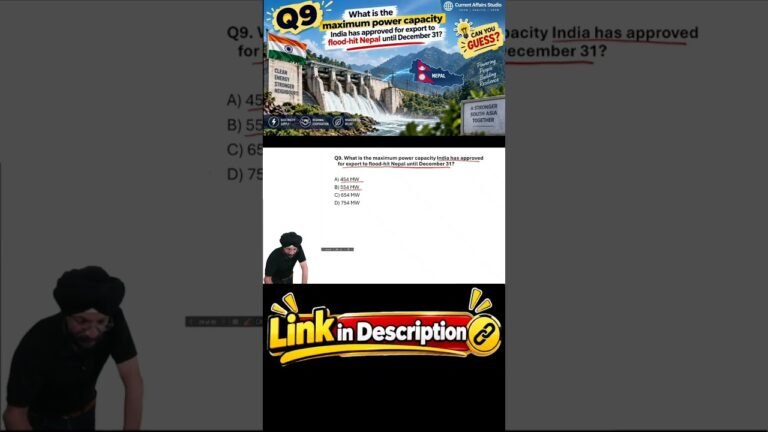
India Approves Power Export to Flood-Hit Nepal ⚡ | How Much Power? | Current Affairs 2026
Question: What is the maximum power capacity India has approved
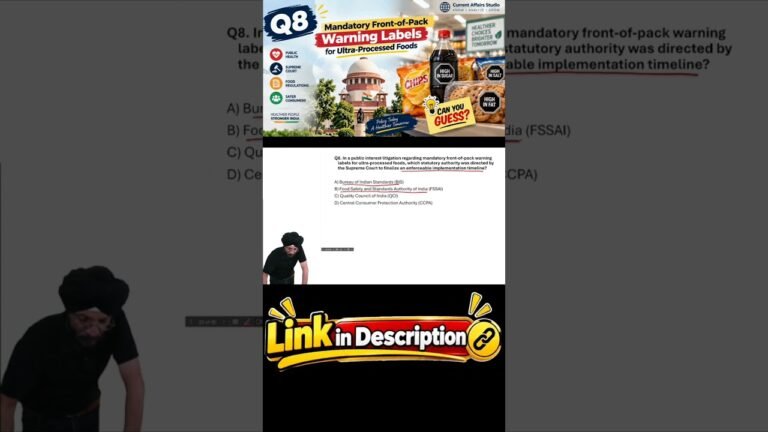
Supreme Court Orders Timeline for Food Warning Labels | FSSAI | Current Affairs 2026
Who is the statutory authority responsible for regulating food safety
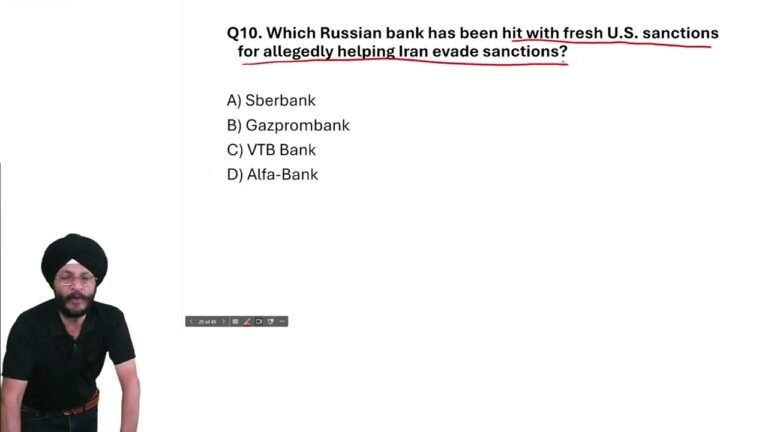
Russian Bank Hit by Fresh U.S. Sanctions 🚨 | Which Bank? | Current Affairs 2026
Daily Current Affairs | September 2026
In this video, test